A Four-Year-Old Chip Just Became 2026's Smartest Upgrade
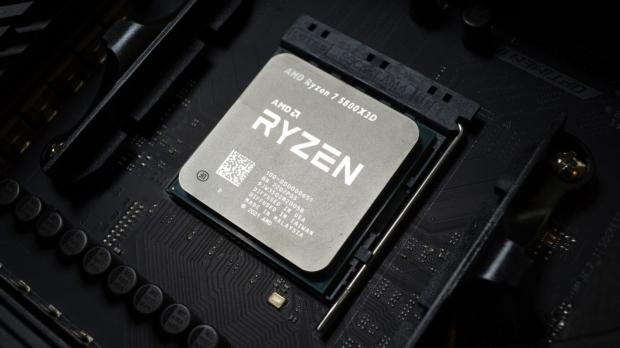
AMD doesn't usually re-release CPUs. Silicon roadmaps move forward — node shrinks, IPC gains, new cache hierarchies. You don't go back to the well. Except now AMD is doing exactly that. Box art leaked this week (via HXL on X) shows the Ryzen 7 5800X3D returning as the 'AM4 10th Anniversary Edition,' and Tom's Hardware is reporting volume launch in the second half of 2026.
Let me say that again, because the implications are wild: a 7nm Vermeer chip from April 2022 is going back into retail boxes in 2026. The same 8-core, 96MB-L3 die. Same 4.5 GHz boost. Same 105W TDP. Identical packaging except for an Anniversary logo at the bottom. AMD is shipping a four-year-old SKU as a current product, and it might be the most honest acknowledgment we've ever gotten from a chip vendor that the traditional upgrade cycle has collapsed.
Why This Is Happening: The DDR5 Memory Catastrophe
Every nanometer counts, but right now every gigabyte of DDR5 costs more. The memory crisis that started in late 2025 has gotten worse — DRAM suppliers redirected fab capacity to HBM3E and HBM4 for AI accelerators, and consumer DDR5 took the hit. A 32GB DDR5-6000 kit that cost $90 a year ago is now flirting with $200. DDR4, meanwhile, is sitting on aging fab capacity that nobody is fighting over. A 32GB DDR4-3600 kit can still be found under $80.
At CES 2026, AMD already telegraphed this. A company representative said they were 'actively working' on bringing back Zen 3 chips to give budget builders an off-ramp from the DDR5 tax. That comment got buried under all the Zen 6 'Medusa Point' hype, but it turns out it was the most important thing AMD said in Las Vegas. The 5800X3D relaunch is the execution of that strategy.
Look at the math from a system-cost standpoint. An AM5 entry build today: B850 motherboard at $180, 32GB DDR5-6000 at $190, Ryzen 7 7700 at $290 — call it $660 just for the platform core. The AM4 equivalent: a B550 board at $90 (used market is flooded), 32GB DDR4-3600 at $75, and a 5800X3D Anniversary Edition that — based on end-of-life pricing patterns — should land somewhere between $250 and $329. That's $415 to $494 for a build that still pushes 140+ FPS averages in modern games at 1080p with the V-Cache doing its work.
The 96MB L3 Cache Still Punches Above Its Weight
Let's get architecturally honest. The 5800X3D's IPC is two generations behind. Single-thread scores trail Zen 5 by roughly 35-40%. But the 64MB stacked SRAM cache layer that 3D V-Cache adds on top of the standard 32MB L3 — for a total of 96MB — does something IPC numbers don't capture. It collapses the memory latency penalty for gaming workloads where the working set fits inside cache.
In cache-sensitive titles like factory simulators, MMOs, and CPU-bound competitive shooters, the 5800X3D still beats out non-X3D Zen 4 parts and trades blows with mid-range Zen 5 chips at 1080p. TechPowerUp's relative gaming performance index has the 5800X3D at roughly 67% of the 9800X3D — meaning a four-year-old chip delivers two-thirds the gaming performance of AMD's current flagship gaming SKU. For one-third the platform cost. The performance-per-dollar math is brutal in 5800X3D's favor.
It's not all sunshine. Multi-threaded productivity workloads — Blender, Cinebench R23 nT, code compilation — show the 5800X3D's age. Zen 3 IPC plus 8 cores plus a 4.5 GHz ceiling can't keep up with a 7700X, let alone a 9700X. If you're rendering or compiling for a living, this isn't your chip. But for gaming-first builds, the cache hierarchy advantage holds.
AM4: Ten Years and Still Shipping
AM4 launched in September 2016 with the Bristol Ridge APUs. Zen 1 followed in March 2017. The platform supported five distinct CPU architectures across its lifespan: Bristol Ridge (Excavator), Zen 1 (Summit Ridge), Zen+ (Pinnacle Ridge), Zen 2 (Matisse), Zen 3 (Vermeer), and the V-Cache variants. That kind of socket longevity is unprecedented in x86 history. Intel ran through LGA 1151, 1151-v2, 1200, 1700, and 1851 in roughly the same window — five sockets to AMD's one.
The Anniversary branding isn't just marketing nostalgia. AM4 is genuinely the longest-supported consumer x86 socket ever shipped. There are still B450 motherboards from 2018 in production, pulling 5000-series Ryzens with a BIOS update. That installed base — millions of motherboards still capable of accepting a Zen 3 chip — is exactly what AMD is targeting with this re-release.
What This Tells Us About 2026's Silicon Economics
Step back from the chip itself and look at what AMD is signaling. They are choosing to allocate TSMC 7nm wafer capacity (or pulling from existing inventory of binned dies — the latter is more likely) to ship a part that competes with their own current-gen lineup at the budget end. That is not a decision a company makes when the upgrade cycle is healthy. That is a decision a company makes when their newest products are getting locked out of the market by adjacent component costs they don't control.
Intel can't easily do this. Their old LGA 1700 platform supports up to Raptor Lake Refresh, but those chips have well-documented degradation issues that make a 'best of' re-release a PR minefield. AMD is the only x86 vendor with a clean, stable, beloved older platform sitting on the shelf ready to be dusted off.
The RTX 3060 is being resurrected on the GPU side. The 5800X3D is being resurrected on the CPU side. Both because the same memory shortage is making current-gen products unaffordable for the mainstream market. The pattern is clear: when the front-end of your roadmap chokes on memory pricing, the back catalog becomes the product.
The Bottom Line for Builders
If you're sitting on an AM4 board with a 3600 or a 5600, the 5800X3D Anniversary is going to be the single most cost-effective gaming upgrade of the year. Drop-in BIOS update, no DDR5 sticker shock, a chip with proven longevity (the original 5800X3D has been running stable in Steam Deck-tier loads for four years now). Expect the launch to happen in Q3 2026 based on the 'second half' window AMD has hinted at.
If you're on a fresh build, the calculus is harder. You're choosing between a dead-end platform that wins on performance-per-dollar today versus an AM5 platform with an upgrade path to Zen 6 'Medusa Point' next year. For pure gaming, dead-end-but-cheap is the rational call in the current memory environment. For everything else, swallow the DDR5 cost and go AM5.
Every nanometer counts — but in 2026, every dollar of DDR5 counts more. AMD has read the room.
Loading comments...