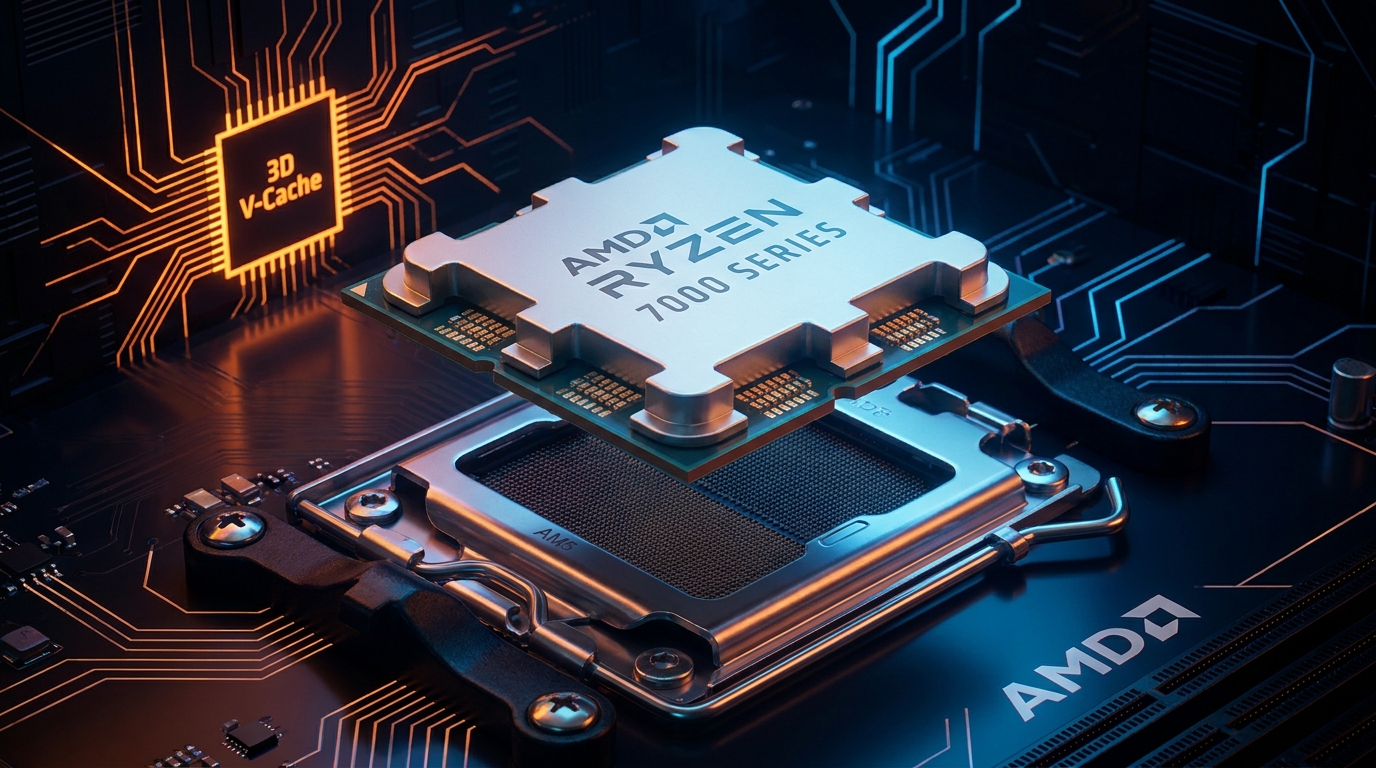
AMD Just Made 3D V-Cache Cheap Again
AMD is launching the Ryzen 7 7700X3D today, July 16, 2026, at a $329 SEP. That's $120 below where the Ryzen 7 7800X3D landed at its original 2023 debut, and it lands into a PC market where DDR5 prices have roughly doubled since Q4 2025. This isn't a performance halo product — it's a deliberate, surgical response to the memory crisis that's been quietly locking mid-range gamers out of new builds.
Every nanometer counts, and so does every dollar when a decent 32GB DDR5-6000 kit now costs more than the CPU sitting under it.
The Silicon: 96MB of L3 for $329
Strip away the marketing and the 7700X3D is a straightforward binning play. It's the same Zen 4 CCD as the 7800X3D, same TSMC N5 process node, same 3D V-Cache die stacked on top of the L3 slice. You get 8 cores, 16 threads, and 104MB of total cache — 96MB of that is L3, delivered by the stacked V-Cache die that has dominated gaming benchmarks since it first shipped in the 5800X3D.
What's cut is frequency. The base clock drops from 4.2 GHz to 4.0 GHz, and the boost drops from 5.0 GHz to 4.5 GHz. That's a 500 MHz haircut on peak boost, which is the more painful number. TDP stays at 120W, which is generous for a chip that's clocked more conservatively — expect it to sip power in gaming loads where the V-Cache is doing the heavy lifting anyway.
Why 500 MHz Doesn't Matter as Much as You'd Think
Here's the architectural reality: 3D V-Cache workloads are dominated by memory latency, not raw clock speed. When you have 96MB of L3 sitting one hop away from the cores, the hit rate on gaming working sets jumps dramatically. The CPU stops waiting on main memory, which is the biggest single bottleneck in modern gaming CPUs. A 500 MHz reduction on boost frequency translates to roughly a 3-5% gaming performance delta versus the 7800X3D at 1080p — not the double-digit hit the number implies.
Contrast that with the 9800X3D, which uses AMD's second-gen V-Cache implementation (compute die on top, cache die on bottom) to unlock much higher clocks. The 9800X3D still wins the outright gaming crown, but it's a $479 chip on an already-expensive platform. The 7700X3D is the pragmatic pick: 90-95% of 7800X3D gaming performance for materially less money.
The RAM Crisis Context
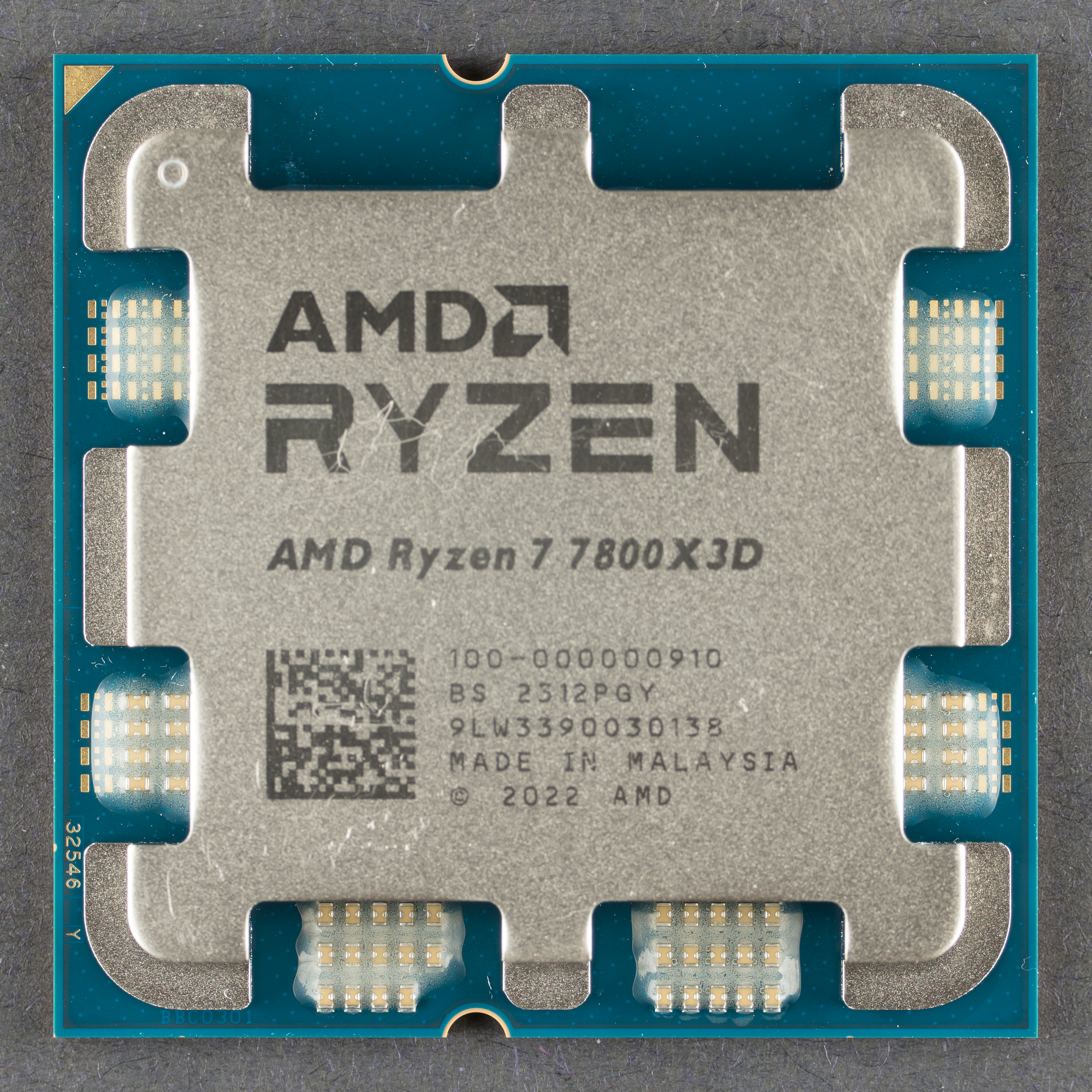
This launch doesn't happen in a vacuum. DDR5 spot pricing has surged as DRAM allocation shifted to AI/datacenter customers, and consumer memory has become the single most inflationary component in a modern build. AMD's calculus is obvious: get X3D silicon into hands at a price point that leaves budget for the DDR5 kit the platform actually needs.
AMD is also relaunching the Ryzen 7 5800X3D for the AM4 crowd at the same time — a chip that pairs with cheap DDR4 and existing 500-series motherboards. Between the two, AMD now has an X3D answer for every gamer who can't or won't pay 2026's DDR5 tax. It's the same playbook: sell the cache, let the platform choice handle the memory pricing problem.
Verdict: The Right Chip at the Right Moment
The Ryzen 7 7700X3D isn't architecturally interesting — it's a bin split of existing silicon. But strategically, it's one of the smartest CPU launches of 2026. AMD is holding the gaming CPU crown with the 9800X3D, defending the mid-range with the 7700X3D, and covering DDR4 holdouts with the resurrected 5800X3D. Intel's Nova Lake, still six months out, has nothing that competes at this price point.
If you were planning an AM5 gaming build and got scared off by RAM pricing, the 7700X3D just made your CPU $120 cheaper. That's the DDR5 kit paid for.
Loading comments...