The Physics of a Melting Connector
Airflow is not optional, it's physics — and neither is the melting 12V-2x6 problem. Every melted connector you've seen on a burnt RTX 5090 or 4090 traces back to one engineering reality: when six 16AWG wires are supposed to share 50 amps of total current, but one wire is actually carrying 22A while another is carrying 3A, you get localized I²R heating on the overloaded pin. Resistance rises with temperature, which raises current on the adjacent path, which raises its temperature — a thermal runaway that ends in molten plastic.
The PCIe 5.1 spec rates a standard 12V-2x6 wire at 9.2A per conductor. Six wires × 9.2A × 12V gives you the headline 600W. On paper, that's fine. In reality, impedance mismatches between pins, microscopic variations in contact pressure, and card-side current distribution mean some wires carry two to three times their share. The connector was engineered with essentially zero thermal margin, and real-world tolerance stack-up ate that margin alive.
What the ROG Equalizer Actually Changes
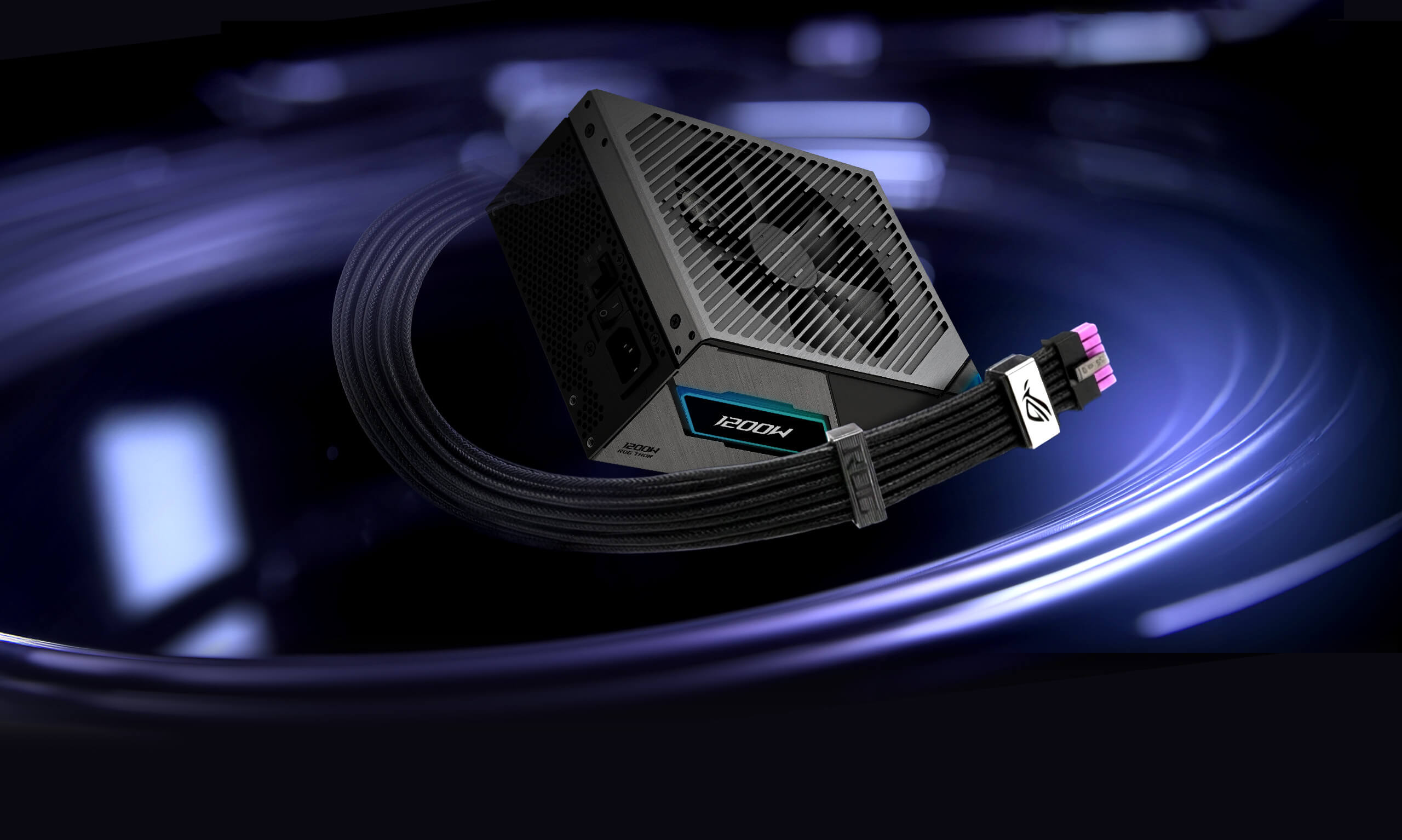
ASUS announced the ROG Equalizer this month as a drop-in 12V-2x6 cable with three engineering changes that actually matter: solid-core tin-plated oxygen-free copper conductors rated for 17A per wire instead of 9.2A, gold-plated spring contacts on the GPU-side connector, and — most importantly — a balancing circuit inside the cable that actively equalizes current distribution across all six positive lines before it reaches the GPU.
That last part is the only interesting one. Thicker wire and better contacts are basic materials engineering. Actively forcing current balance across the six 12V conductors attacks the root cause of pin melting instead of just giving it more thermal headroom to fail into. ASUS hasn't published the topology, but based on the description it's either passive impedance matching or small series-wound inductors per line. Either way, the effect is measurable.
The Thermal Data
ASUS ran the worst-case test I'd want to see: physically remove the middle wires on both a standard cable and the Equalizer, then force all 600W through the remaining conductors. On a standard cable, the remaining wires hit 146°C — already 41°C above the 105°C insulation safety limit where plastic begins to deform. The ROG Equalizer held 73.4°C under the same abuse. That's a 72°C delta, which in thermal engineering terms is the difference between "field failure" and "operating nominally."
The 10-day continuous stress test at full 600W is the more real-world number. Standard cables in this scenario historically creep toward their 105°C limit and sometimes past it. The Equalizer settled around 100°C after the first hour and held there for 240 hours — still hot, still close to the insulation limit, but consistent and never climbing. That's what thermal equilibrium actually looks like when you design for it.
Availability, Compatibility, and the Upgrade Program
The Equalizer ships in Q2 2026 bundled with ASUS ROG Thor III and ROG Strix Platinum power supplies. It's also being sold as a standalone cable — and critically, it works with any ATX 3.1 PSU with a native 12V-2x6 socket, not just ASUS units. That means Corsair RMx, Seasonic Prime PX, MSI MEG Ai, and be quiet! Dark Power Pro 13 owners can all use it. An upgrade program for existing ROG PSU owners is "coming soon" according to ASUS, which in corporate-speak means Q3 at earliest.
Certifications are the standard set: UL1581 flame rating, UL758, ATX 3.1, PCIe 5.1. ASUS is backing it with a 3-year warranty, which is longer than most PSU cable accessories ship with. Pricing hasn't been announced and that's the one red flag — if this lands at $89 like some ROG accessories have, the value proposition collapses against just buying a better PSU.
Does This Actually Fix 12V-2x6?
No. Let me be blunt: this is a Band-Aid on a connector that was spec'd too aggressively. The real fix would have been PCIe 5.1 mandating a larger pin pitch, higher per-contact current rating, and active current sensing on the GPU side. What Intel and PCI-SIG gave us instead was 12V-2x6 with shorter sense pins and a prayer.
That said, a well-engineered Band-Aid is still better than the status quo. If you're running an RTX 5090 pulling 575W through a connector that's already been photographed melting in the wild, an actively-balanced cable with 85% higher current rating per wire is a meaningful risk reduction. It's not the fix we needed — it's the fix we get while we wait for 12V-2x8 or whatever the next revision will be called.
Keep your case airflow clean, your cable runs unkinked, and measure your connector temperatures under load if you can. The cable is one part of the thermal chain. Physics doesn't care about marketing.
Loading comments...