ASUS Picked One Hell of a Time to Sell RAM
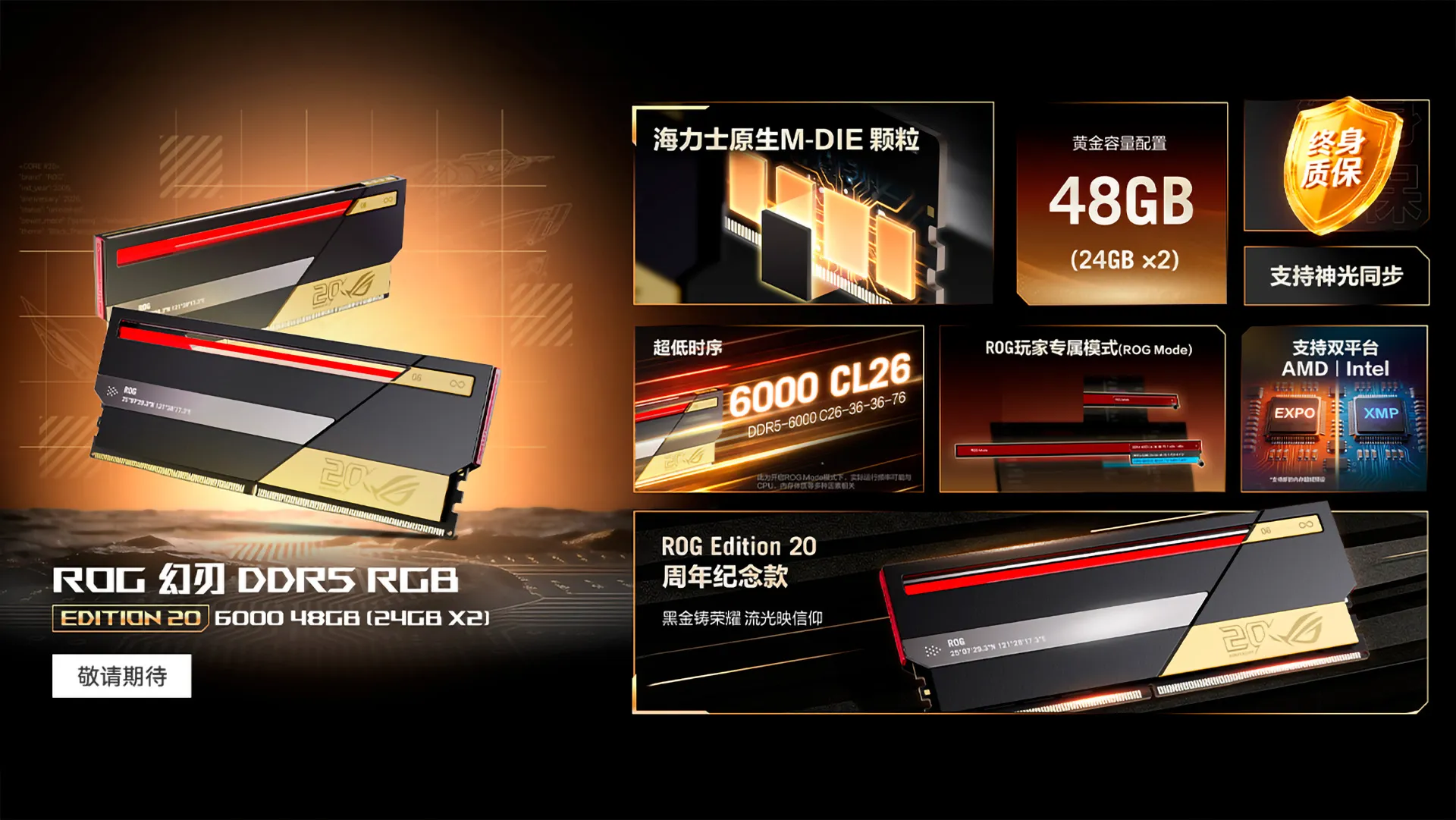
ASUS has officially entered the retail memory market with the ROG 幻刃 DDR5 RGB 20th Anniversary Edition, a limited 48GB kit announced at ROG Day 2026. The kit is built as two 24GB modules, rated for DDR5-6000 with tight CL26-36-36-76 timings at 1.45V, and it supports both AMD EXPO and Intel XMP profiles. So far, so enthusiast-normal.
Then the price lands like a dropped hard drive: $880. That makes this 48GB RAM kit more expensive than the $829 starting price of an RTX 5070 Ti when that GPU is actually in stock. Memory pricing has been ugly all year, but a near-$900 48GB desktop kit is the kind of number that makes homelab people start checking whether their old DDR4 platform can survive one more rebuild.
The Real Trick Is ROG Mode
The technical hook is ASUS' motherboard-exclusive ROG Mode. On compatible ROG boards, the kit can be pushed to DDR5-8000 with 36-48-48-110 timings at 1.40V through a BIOS profile. That is not magic; Tom's Hardware reports the kit uses SK hynix M-die ICs, which are among the better DDR5 dies for high-frequency overclocking.
Still, this is a very ASUS way to enter RAM: sell the ecosystem, not just the DIMMs. Standard EXPO/XMP gets you DDR5-6000 CL26, while the best advertised profile is locked behind ROG motherboard integration. If you already live inside the ROG stack, fine. If not, you are paying luxury pricing for a feature you may not fully use.
$880 for 48GB Is the Memory Shortage in One Product
For context, Tom's Hardware lists a comparable G.Skill Trident Z5 Neo RGB DDR5-6000 48GB kit at $799.99, while ASUS' ROG kit lands at $880. That is roughly a 10% premium over an already-expensive competitor, and about 6% above the RTX 5070 Ti's $829 reference point. Yes, we are now comparing RAM kits to GPUs because the memory market has lost the plot.
The shortage backdrop matters. DRAM supply is tight, high-end modules are expensive, and every flashy limited-edition kit competes for the same underlying IC supply that could otherwise go into less glamorous systems. As a data person, I would rather see more affordable high-capacity, validated, boring memory than another RGB halo product — but halo products are where margins live.
Good Silicon, Questionable Priorities
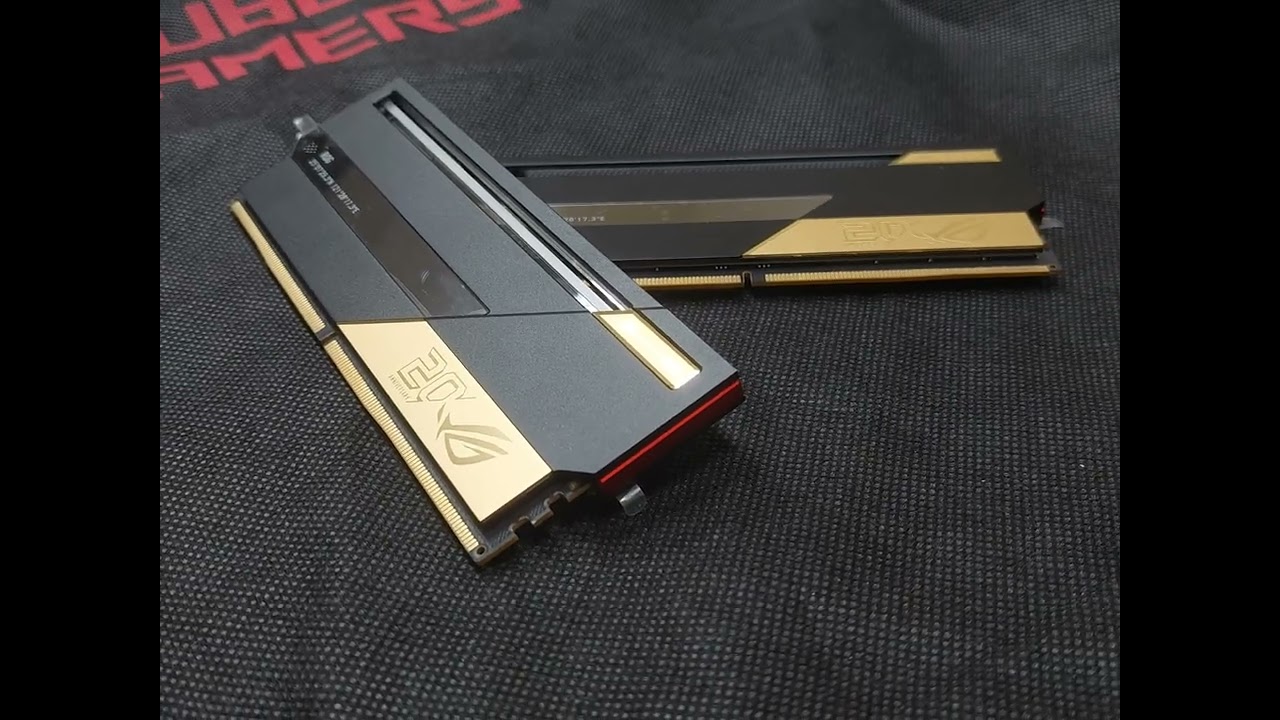
The actual spec sheet is not embarrassing. DDR5-6000 CL26 is a strong daily profile for modern AMD and Intel platforms, and DDR5-8000 is legitimately high-end if your IMC, motherboard topology, and patience cooperate. The 2x24GB configuration is also useful: 48GB is a nice middle ground for creators, VM-heavy desktops, and people who keep 200 browser tabs open like that is a personality trait.
But this is still non-ECC gaming memory aimed at prestige builds, not data-integrity-first workstations. If your machine matters because it stores irreplaceable work, photos, databases, or VM images, spend money on tested stability, backups, UPS protection, and checksummed storage before chasing a limited ROG kit. No RAID is a substitute for backups, and RGB definitely is not a substitute for verification.
Verdict: Fast, Collectible, and Financially Absurd
ASUS' first ROG DDR5 kit is technically interesting and probably binned well, but the $880 price makes it a symbol of the 2026 DRAM crunch more than a sensible recommendation. It launches in late June with a limited lifetime warranty, developed with Biwin, while ASUS is also expanding its ROG-certified memory ecosystem through partners like Corsair, G.Skill, Kingston, and Adata.
If you are building a no-compromise ROG showcase rig, this kit is aimed directly at you. Everyone else should wait for the shortage to cool, buy validated DDR5 at sane pricing, and put the savings toward another backup target. Future-you, the one recovering files at 2 a.m., will appreciate that more than DDR5-8000 screenshots.
Loading comments...