A Switch You Can Actually Call a Switch
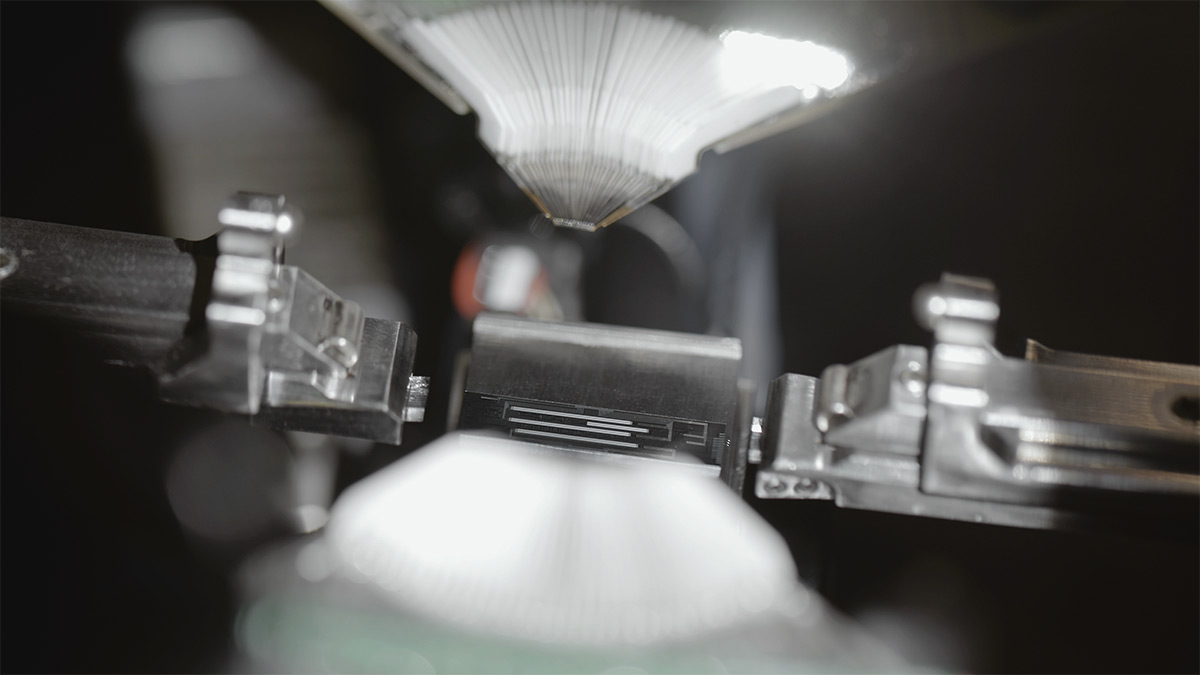
If it doesn't have ports, it's not a switch. That's been my line for years, mostly directed at vendors trying to rebrand controllers and overlays as 'switches' to inflate their portfolios. But on April 23, Cisco shipped a prototype of something that genuinely surprised me: the Universal Quantum Switch. It routes quantum information between quantum computers over the same single-mode fiber I'm running between my MikroTik CRS and my homelab rack — no cryogenic cooling, no exotic transport medium, no proprietary interconnect. Just photons over standard telecom fiber, at room temperature.
Let me say that again because the magnitude of it didn't hit me until the third read of the press release: **a quantum-state-preserving switch over OS2 fiber at room temperature**. The physics community has been chasing this for a decade. Every previous demonstration of quantum networking has needed liquid-helium cooling, bespoke fiber, or end-to-end vendor lock-in. Cisco just routed entangled photons through a switch that, from the outside, looks like a regular line card.
The Numbers That Matter
In the proof-of-concept work, Cisco's switch preserved entanglement and encoding fidelity with **less than or equal to 4% degradation** through the routing operation. That's the headline metric, and for anyone who's read a quantum networking paper in the last five years, it's an absurd result. Most non-trivial routing demos lose 20-40% of their fidelity per hop because every conversion stage introduces decoherence.
The other key spec: **up to 100 kilometers** of standard telecom fiber between endpoints. That's metro-area reach. That's enough to interconnect quantum computers in different data centers across a city, which is exactly the topology that hyperscalers are starting to build for distributed quantum compute.
And the kicker — it supports all four major qubit encoding modalities:
- **Polarization** (validated in the prototype) - **Time-bin** - **Frequency-bin** - **Path encoding**
This is the part that got my attention as a networking person. Cisco's patented conversion engine translates *between* encoding schemes at ingress and egress. In TCP/IP terms, it's like an L7 application gateway — except instead of bridging HTTP and gRPC, it's bridging fundamentally different ways of encoding quantum information into photons. The switch doesn't care which vendor's qubits you're sending; it handles the translation in the middle.
Why This Is a Networking Story, Not a Quantum Story
Most quantum announcements are about qubit counts. This one isn't. This is about the realization — overdue, in my opinion — that **scaling quantum computing is a networking problem, not a physics problem**. Roadmaps from IBM, Atom Computing, and the rest of the quantum cohort all project physical qubit counts hitting 1,000 to low 10,000s within three years. But useful quantum advantage requires *millions* of qubits. You don't get there by building one impossibly huge quantum computer. You get there by building lots of medium-sized ones and connecting them.
Which, as anyone who's ever cabled a Clos fabric knows, is a switching problem.
Vijoy Pandey, who runs Cisco's Outshift research arm, put it bluntly: "The path to practical quantum computing runs through the network, and it is being built now." That's not a marketing line — it's an architectural thesis. Single quantum machines hit thermal, control, and qubit-decoherence limits long before they hit useful problem sizes. The only way through is east-west interconnect between separate machines.
And here's the thing nobody outside the field talks about: those separate machines are going to be built by *different vendors using different qubit technologies*. IBM uses superconducting qubits. Atom Computing uses neutral atoms. Quantinuum uses trapped ions. Each one encodes information differently. Without a switch that can translate between encodings on the fly, the entire 'quantum internet' concept dies in vendor silos. This switch is the universal adapter that prevents that failure.
The Partnerships Tell the Story
Cisco isn't building this in a vacuum. The named collaborators are exactly who you'd expect for a multi-vendor interop play:
- **IBM** — superconducting qubits, longest commercial track record - **Atom Computing** — neutral-atom qubits, recently scaled past 1,000 physical qubits - **Qunnect** — quantum networking specialist, builds entanglement distribution gear
This is the first quantum networking announcement I've seen where the partner list reads like a federation rather than a captive ecosystem. Cisco isn't trying to lock the quantum stack to Cisco silicon — it's positioning itself as the *neutral* L1/L2 fabric provider, which is the smartest possible play for an incumbent networking vendor staring down a decade of architectural disruption.
What's Actually Shipping (And What Isn't)
Let me temper the hype, because this is still a research prototype. The switch is not in Cisco's product catalog. There's no SKU, no street price, no GA date. Cisco's own framing is conservative: they're estimating 1-2 years of additional validation work on the conversion and quantum-state-preservation primitives before this becomes a commercial product. Realistically, that means **2027-2028 for a shippable Universal Quantum Switch**, and even then it'll be priced for hyperscalers and national labs, not your colo cabinet.
What *is* real: the proof-of-concept is working in Cisco's labs today, with measured fidelity numbers and validated polarization-mode operation. The other three encoding modalities (time-bin, frequency-bin, path) have designed support but haven't all been demonstrated end-to-end yet. The Cisco quantum entanglement chip and the network-aware Quantum Compiler — both companion pieces to this switch — are also in research prototype phase.
The Homelab Take
You are not putting this in your rack. Ever. Not because of the price (that's solvable on a long enough timeline) but because the use case — interconnecting quantum computers — isn't going to live at home for at least a generation. The homelab analog of this switch would be something like running Quantum Key Distribution over the same fiber you use for 10GbE, and there are early commercial QKD products that already do exactly that, although the economics are absurd at this scale.
What does matter for those of us who care about networking architecture: the precedent here. Cisco has demonstrated that **quantum information can be carried over the same physical-layer infrastructure we already deploy** — single-mode fiber, telecom-band wavelengths, room-temperature optics. That means when quantum networking does eventually trickle down (and it will, the same way 10GbE eventually trickled down from data centers to my homelab), the cabling and conduit you put in today is probably reusable. That's a quietly significant guarantee.
The Universal Quantum Switch is the most interesting networking announcement I've read this month, and I write about networking for a living. It won't matter to your homelab in 2026. It might matter to it in 2036. And the people building data centers right now should already be paying attention — because the era of quantum networking just stopped being hypothetical.
Loading comments...