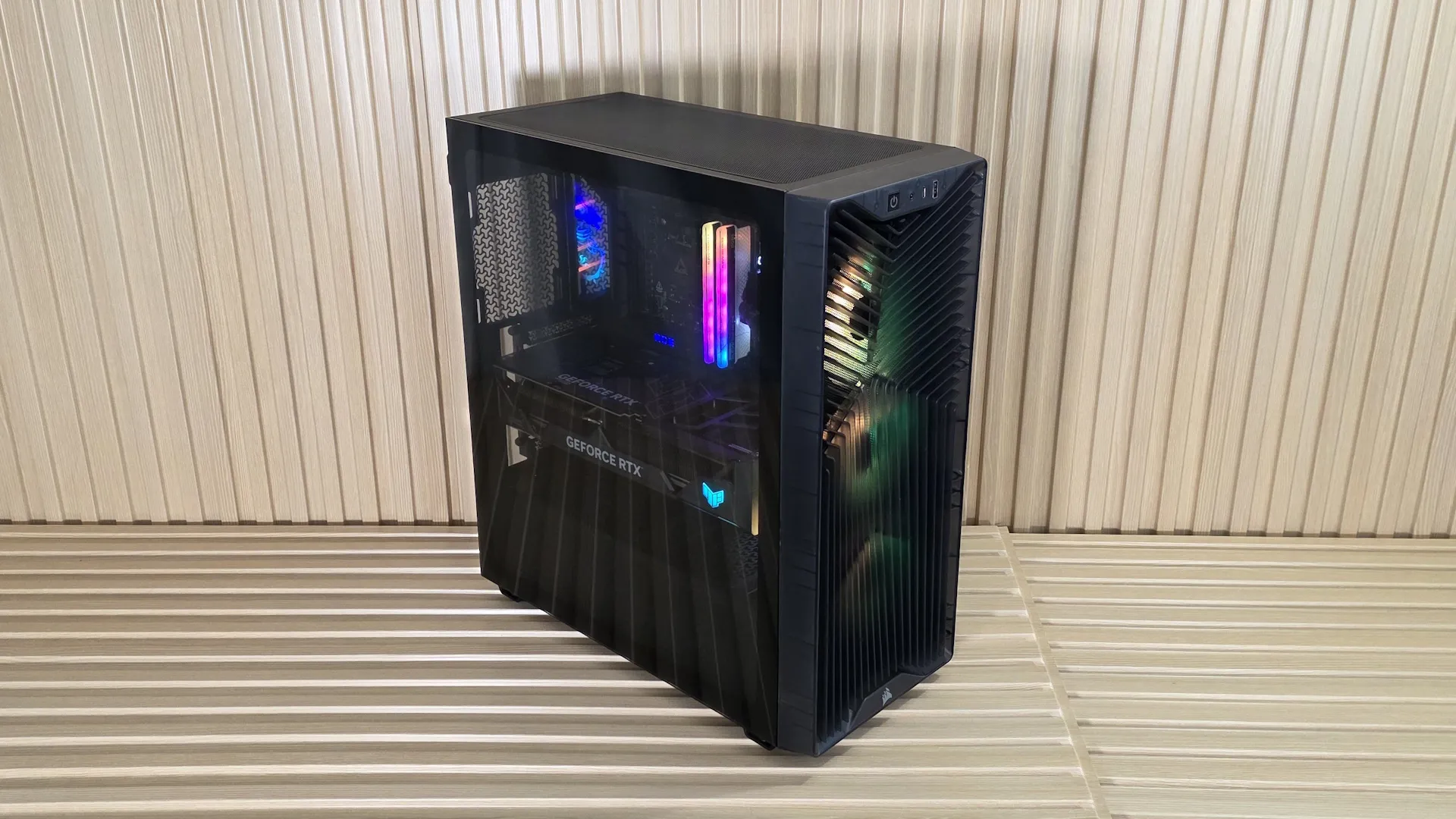
A Budget Case That Actually Starts With Airflow
Corsair’s 3200D RS ARGB is not trying to be a sculptural aluminum monument or a glass aquarium with thermal debt. It is a $79.99 mid-tower with a vented Y-pattern front panel, three included RS120 ARGB 120mm fans, and enough radiator support to cool a genuinely hot gaming system. That matters, because the budget case market is full of boxes that look clean in product renders and then suffocate a 300W GPU the moment the side panel goes on.
Tom’s Hardware has the 3200D RS ARGB in hand, and the spec sheet is refreshingly direct: Mini-ITX, Micro-ATX, and ATX support, 400mm of GPU clearance, 165mm of CPU cooler clearance, seven expansion slots, and support for rear-connect/BTF motherboards. The non-RGB model comes in at $69.99, while the ARGB version lands at $79.99. In 2026 component pricing, that is almost suspiciously reasonable.
The Included Fans Are the Real Value
The important line item is not the glass panel or the lighting. It is the three RS120 ARGB fans mounted up front. Corsair rates each RS120 at over 72 CFM and up to 2,100 RPM, which gives the chassis a theoretical front intake capacity north of 216 CFM before restriction from mesh, grille geometry, dust loading, and fan curve tuning. Real airflow will be lower, obviously, but starting with three competent intakes is vastly better than selling a “high airflow” case with one lonely rear exhaust fan and a prayer.
Airflow is not optional, it’s physics. A perforated PSU shroud and angled bottom 120mm fan position also show Corsair is thinking about GPU thermals instead of merely CPU radiator marketing. A bottom fan aimed at the graphics card can be useful in modern builds where the GPU is the dominant heat source, especially with thick triple-slot cards recirculating warm air near the motherboard tray.
Dual 360mm Radiator Support Is Unusual at This Price
The 3200D RS supports up to 360mm radiators in both the front and top, plus a 120mm radiator at the rear. That is strong flexibility for a sub-$80 enclosure, though the usual warning applies: top radiator clearance is where budget mid-towers often get tight. Thick radiators, tall motherboard heatsinks, and 25mm fans do not negotiate politely.
Corsair did not include a fan hub, vertical GPU mount, or modular radiator rails, and I am fine with that. Those are convenience features, not thermal fundamentals. At this price, I would rather see the bill of materials spent on an open front panel, decent included fans, sane GPU clearance, and a structural anti-sag arm. That is exactly where the 3200D appears to spend its money.
The Front I/O Has One Weird Fossil
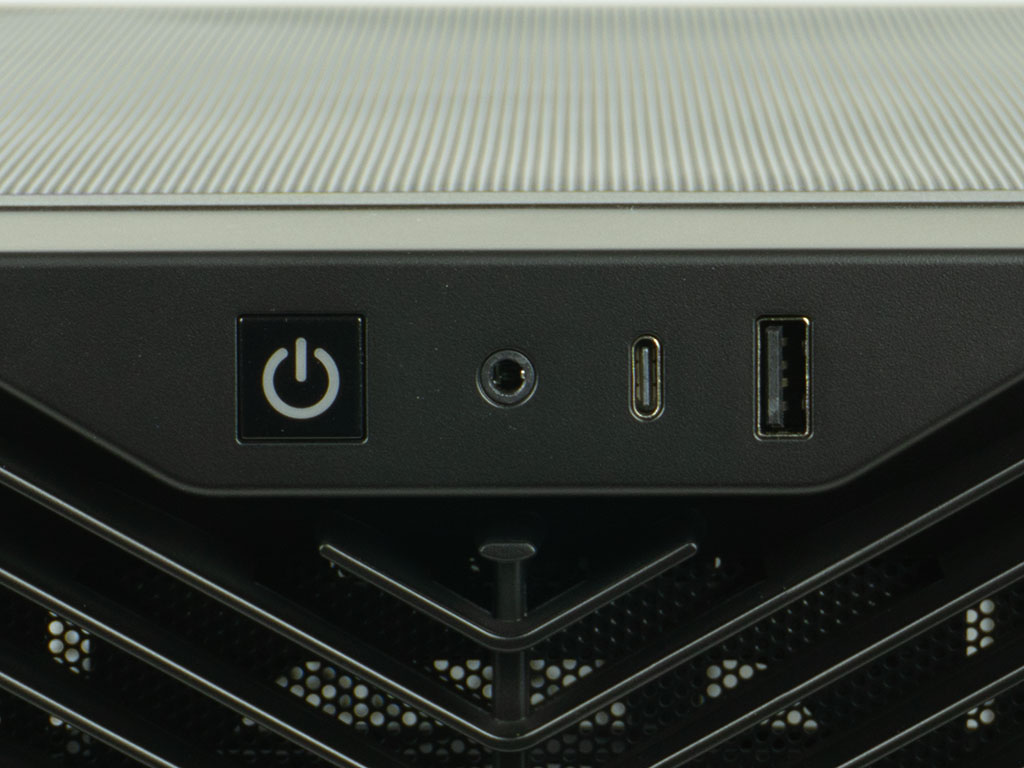
The odd decision is front-panel USB. Corsair gives the case one USB 3.2 Gen 2x2 Type-C port rated at 20Gbps, then pairs it with a USB 2.0 Type-A port rated at 480Mbps. On a new 2026 case, that Type-A port feels like it wandered in from an office PC refresh cycle. Tom’s Hardware notes Corsair has already said an updated version will move to a faster Type-A port, but the initial configuration is still a strange compromise.
For builders, the practical read is simple: if you mainly use the front Type-C port, no problem. If you frequently plug in fast external SSDs, capture devices, or high-speed card readers through Type-A, wait for the revised front I/O or budget for using rear motherboard ports. Case airflow can be excellent, but front I/O is also part of daily usability.
Bottom Line: Sensible Metal, Not Theater
The 3200D RS ARGB looks like a competent budget airflow chassis because it prioritizes the boring engineering pieces: open intake, three front fans, GPU clearance, radiator options, and a hidden anti-sag support. It is not perfect, and I want standardized noise-normalized thermal testing before calling it a category leader, because noise measurements are sacred.
Still, this is the kind of budget case design I want to see more of. Less decorative obstruction, more pressure path. Less tempered-glass theater, more intake area. If the street price holds near $80, Corsair has a very credible mainstream enclosure here — just make sure you know which USB revision you are buying.
Loading comments...