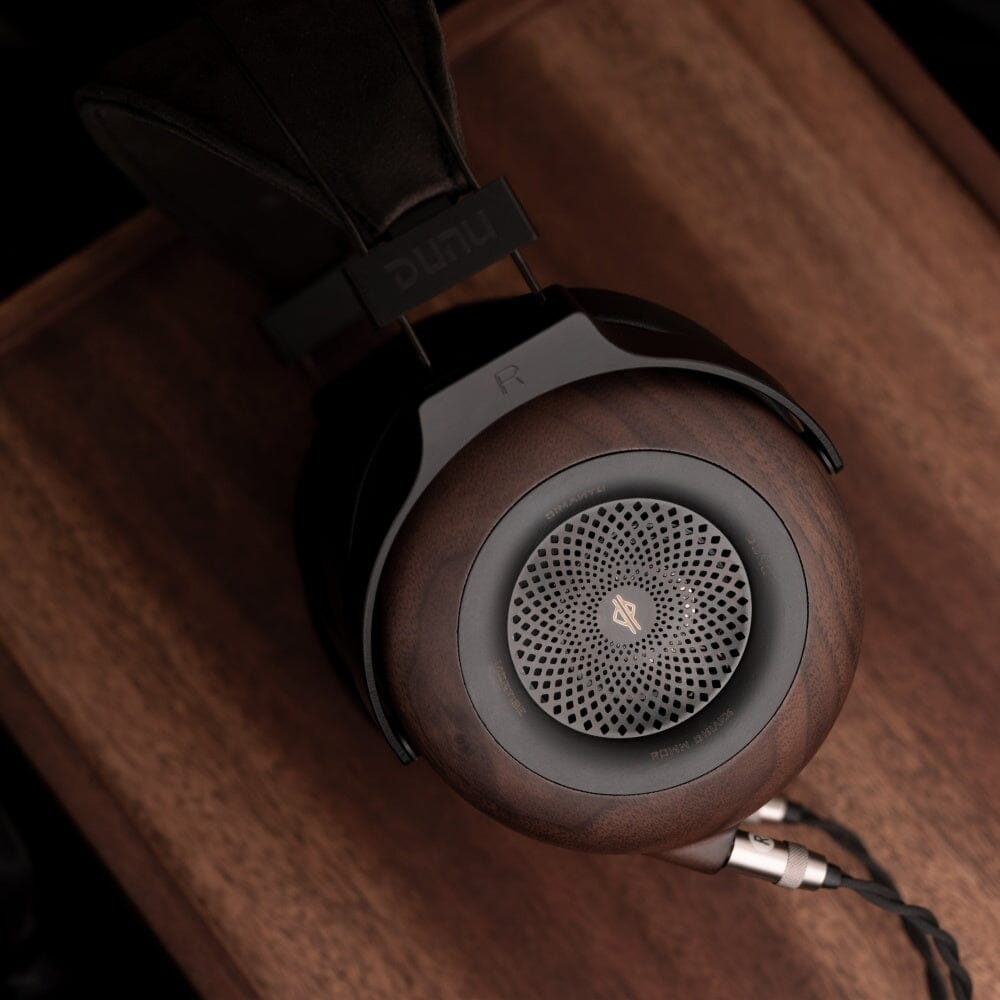
DUNU Steps Outside
DUNU has been a fixture in the IEM world for years. The Vulkan, the SA6, the Titan S — all earphones, all in-ear. The Mortise is something different entirely. It is the company's first serious open-back over-ear headphone, and on paper, it reads like a statement of intent rather than a tentative experiment.
At $429.99 ($409.99 at launch), the Mortise slots into one of the most competitive brackets in headphone audio. This is Sennheiser HD 660S2 territory. It is where the HiFiMAN Sundara lives. Any newcomer here needs to justify itself immediately, and DUNU's approach is to lean hard into materials science and driver engineering.
The Driver: Carbon Fiber at 50mm
The core of the Mortise is a 50mm full-range dynamic driver built around an ultra-thin carbon fiber diaphragm. Carbon fiber is rigid and lightweight — two properties that matter enormously in transducer design. A stiffer diaphragm breaks up less at high frequencies, and a lighter one responds faster to transient signals. The result, when executed well, is cleaner treble extension and tighter bass control.
DUNU pairs this with a high-flux magnetic circuit using N52 neodymium magnets — the strongest grade commercially available. Higher flux density means the voice coil operates in a more uniform magnetic field, which reduces distortion and improves efficiency. The Mortise specs bear this out: 98 dB/mW sensitivity and 38 ohm impedance. This is easy to drive. A phone can power it, though it will scale with better amplification.
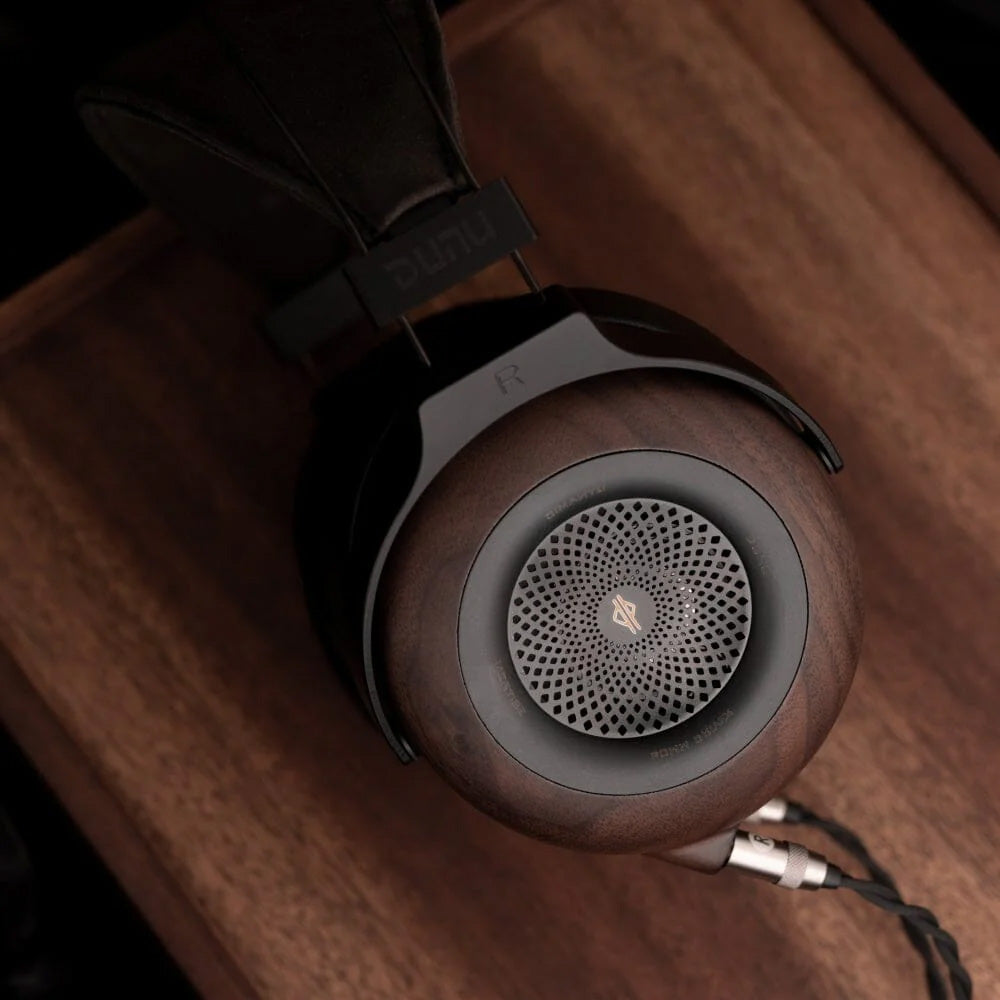
The frequency response is listed at 5 Hz to 40 kHz. That sub-bass extension to 5 Hz is notable — many 50mm dynamic drivers roll off well before that. Whether the response at those extremes is flat or merely present remains to be seen, but the claimed range suggests DUNU has paid attention to driver excursion and enclosure tuning.
Flat response is just the beginning. What matters is whether the Mortise can resolve micro-detail and present a convincing soundstage — areas where open-backs live or die.
Black Walnut: Not Just Aesthetic
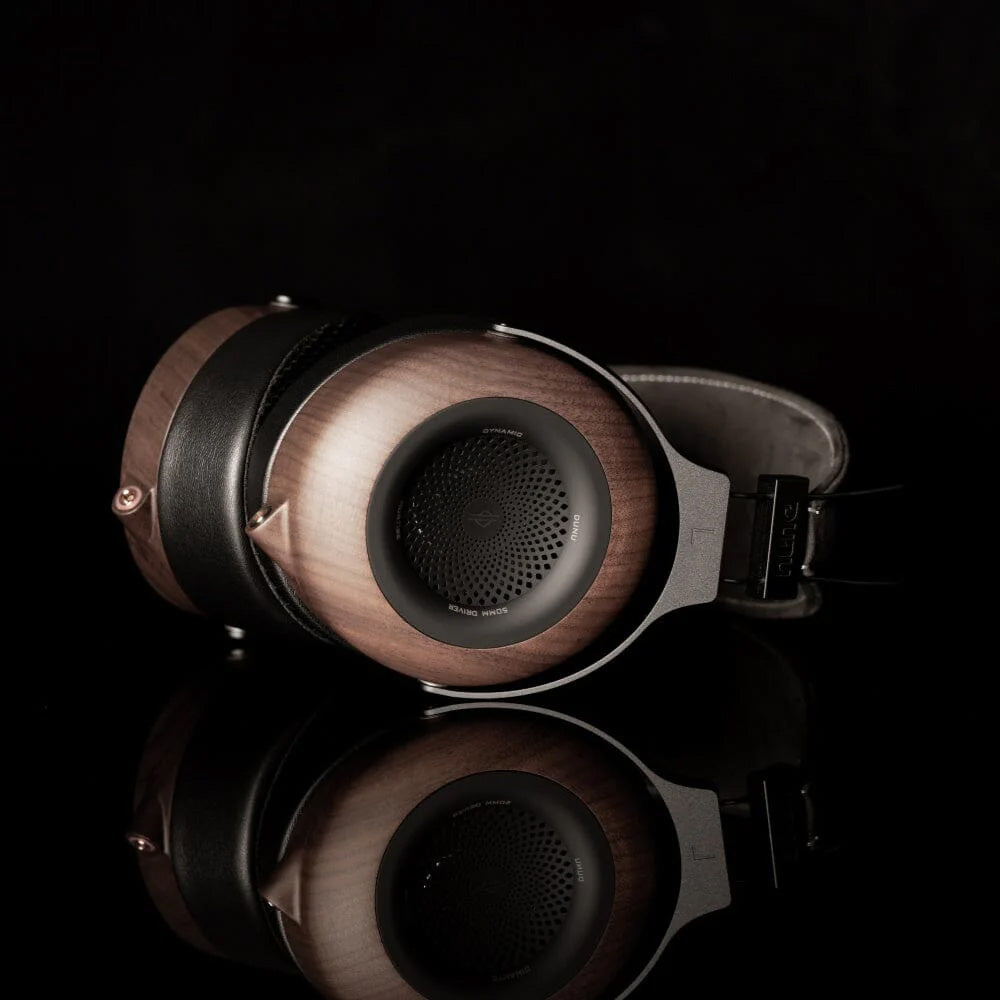
The earcup housings are machined from North American black walnut that has been stabilization-treated to prevent warping and cracking. Wood cups are not new in headphone design — ZMF has built an entire brand around them, and Audio-Technica's W5000 series used ebony. But DUNU's choice of walnut at this price point is interesting.
Wood has natural damping properties that differ from plastic or aluminum. Walnut specifically tends to absorb mid-frequency resonances without over-damping the highs, which can contribute to a warmer, more organic midrange character. The open-back design means the rear wave exits freely, so the cup material primarily influences internal reflections rather than overall isolation.
The suspension surround system is independently flexible, which suggests DUNU is trying to control driver excursion more precisely than a standard fixed surround would allow. This typically reduces harmonic distortion at higher SPL.
Cable and Connectivity
DUNU includes a high-purity single-crystal copper cable terminated with their Q-Lock Mini swappable connector system. Both 3.5mm single-ended and 4.4mm balanced plugs are included in the box. The headphone-side connection is dual 3.5mm — a standard that makes aftermarket cable options abundant.
The Q-Lock system is a genuine convenience. Instead of re-terminating or buying separate cables for balanced and single-ended sources, you twist the connector and swap. It is a small detail, but it reflects practical thinking about how people actually use headphones across different sources.
Where This Fits
The $400-500 open-back segment is arguably the sweet spot of high-fidelity headphone audio. Below it, you make compromises. Above it, you hit diminishing returns. The Mortise enters this space with a combination of material choices — carbon fiber driver, walnut housing, OCC copper cable — that would typically command a higher price from established brands.
The question is tuning. DUNU describes the sound as "smooth and balanced with natural warmth, deep bass response with lush midrange and clear, defined treble." That is marketing language, but it suggests a mild warm tilt rather than a reference-neutral target. For a wood-cupped dynamic driver, that would be consistent with the physical design.
DUNU's IEM tuning has generally been competent, sometimes excellent. Whether that expertise translates to a full-size open-back remains the open question. The driver technology and build quality are clearly there. Now it needs ears on it and measurements to confirm what the spec sheet promises.
Loading comments...