Intel Just Telegraphed an APU Punch
Intel's Nova Lake-S leaks have been spilling out at a steady drip since the start of April 2026, and most of them have focused on the obvious headline grabbers: the 52-core flagship, the 288MB bLLC cache stacks, the DDR5-8000 memory controller. All cool on paper. But the SKU that surfaced on April 14 is the one I keep coming back to, because it tells a much more interesting story about where Intel is aiming this generation.
The leak — dropped by the same source feeding the Nova Lake-S preliminary lineup — describes a midrange 16-core part with four Coyote Cove P-cores, eight Arctic Wolf E-cores, four Arctic Wolf low-power E-cores in the SoC tile, and a 12 Xe3P-core integrated GPU. That iGPU configuration is six times the graphics resources of every other desktop Nova Lake-S SKU on the leaked roadmap, which top out at a vestigial 2 Xe3 cores.
This is not a flagship. This is not a halo product. This is Intel quietly building a desktop APU and pointing it at the segment AMD has owned uncontested since Raven Ridge.
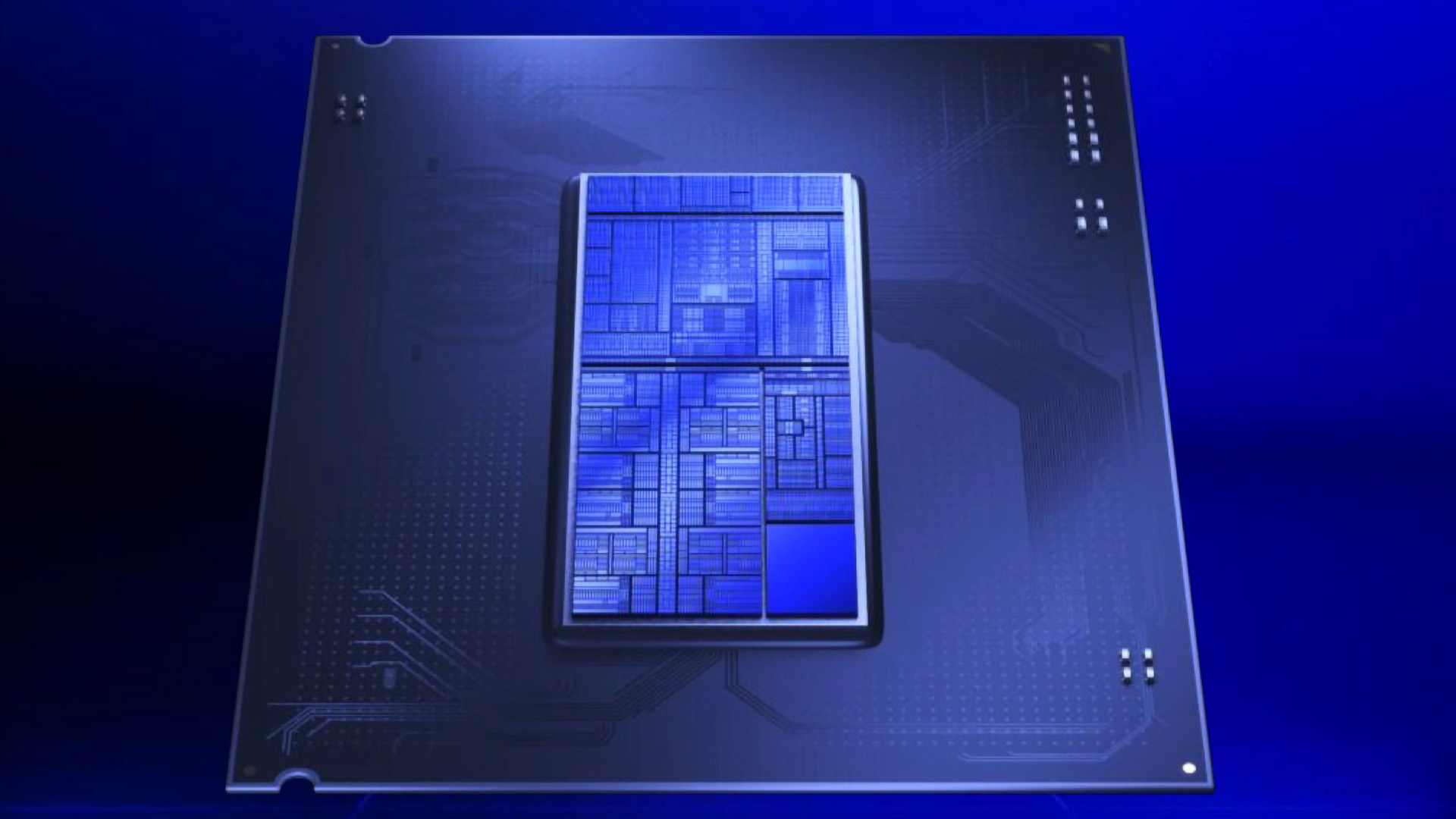
Reading the Tile Layout Like a Floor Plan
Let's break down what's actually happening at the silicon level, because the core configuration here is genuinely unusual for an Intel desktop part.
The 4P+8E+4LP-E layout means three different core flavors on three different power-performance curves. Coyote Cove is the new P-core, succeeding Lion Cove and reportedly delivering roughly 15% IPC over its predecessor. Arctic Wolf is the new E-core, replacing Skymont and tuned for area efficiency. The four LP-E cores live in the SoC tile — same architecture as the regular E-cores but on a separate, lower-leakage power island, the same trick Lunar Lake used to slash idle power.
What's interesting is the ratio. Most of Intel's gaming-focused Nova Lake-S SKUs lean heavier on P-cores: the leaked Core Ultra 7 P1D runs 8P+12E+4LP-E, the Ultra 9 P2D runs 8P+16E+4LP-E. The iGPU-focused SKU cuts P-cores in half down to four. That's a deliberate die area trade — every P-core you drop is silicon budget you can reallocate to the GPU tile or shrink the package.
With 12 Xe3P cores instead of 2, the GPU tile alone is doing the work of a small discrete card. The Xe3P designation is key here. The "P" suffix points to the higher-performance Xe3 derivative — same Celestial graphics architecture that's expected to ship in Intel's Battlemage successor, but tuned for integration. Earlier Xe3 leaks suggested it could outperform AMD's Radeon 890M (16 RDNA 3.5 CUs in the Ryzen AI 9 HX 370) per-CU. Twelve Xe3P cores should comfortably exceed anything AMD currently ships in a desktop APU.
Why Intel Hasn't Had a Real Desktop APU
For context on why this matters: Intel hasn't made a serious play for the desktop APU market in years. Yes, every Core i5/i7/i9 has a UHD Graphics block soldered on, but those have been afterthoughts — 24 to 32 EU configurations stretched across multiple generations, designed to drive a display, not run games.
Meanwhile AMD has been printing money in the segment. The Ryzen 7 8700G with Radeon 780M (12 RDNA 3 CUs) is the current desktop APU king, and the upcoming Strix Halo platform — already shipping in handhelds and the rumored Ryzen AI Max desktop variants — pushes it further with up to 40 RDNA 3.5 CUs. The pattern has been clear for half a decade: if you want a sub-$500 PC that can play modern games at 1080p without a dedicated GPU, you buy AMD.
Intel's response has been Meteor Lake, Lunar Lake, and Arrow Lake's various Arc-branded iGPUs — but those have largely been confined to laptops. On the desktop side, the iGPU has remained a postage stamp.
A 12 Xe3P-core Nova Lake-S desktop part would be the first serious crack at this market in roughly a decade, and the timing is sharp. NVIDIA has slashed RTX 50 supply by 15-20% and entry-level GeForce cards are becoming difficult to source at MSRP. AMD just pulled the RX 6500 XT-class budget GPUs off most retail channels. The sub-$200 discrete GPU market is a wasteland. A capable iGPU SKU walks straight into that gap.
The LP E-Core Power Story
The four Arctic Wolf LP-E cores in the SoC tile are worth a brief detour, because they explain a lot about where Intel sees this chip running.
LP-E cores are not just slower E-cores. They live on a separate clock and voltage domain — typically much lower than the main compute tile — and they share the SoC tile with the memory controller, display engine, and I/O. The benefit is that the OS scheduler can park background tasks (Windows update, Discord, browser tabs, sync clients) on the LP-E island and keep the main compute tile fully power-gated when the workload is light.
On a desktop where power efficiency historically hasn't mattered, that sounds like overkill. But it makes more sense when you consider that an APU-class system is likely to end up in small form factor builds, mini-PCs, and entry-level prebuilds where thermal and power budgets actually matter. A 65W cTDP part that drops to single-digit idle thanks to LP-E offloading is much more interesting in an SFF chassis than a traditional Intel desktop chip that idles at 30W+.
What's Still Missing From the Leak
I want to flag the asterisks. The leak is described as preliminary and we don't have boost clocks, base clocks, or final cache configuration. We don't know whether this SKU gets bLLC — though based on the broader Nova Lake-S leak, only three SKUs in the entire lineup get bLLC and they're all flagship-tier dual-die parts. This iGPU-focused SKU is almost certainly bLLC-free.
We also don't know which process node the GPU tile is using. Nova Lake compute tiles are reportedly on Intel 18A, but Intel has been mixing TSMC N3 and N2 into the GPU and SoC tiles for the last few generations via Foveros packaging. A TSMC N3 or N2 GPU tile would deliver better density and power than an 18A version, and given that this SKU lives or dies on its iGPU, it would be a logical choice.
Memory bandwidth is the other open question. DDR5-8000 dual-channel works out to 128 GB/s theoretical, which is respectable but still well short of what a discrete GPU with dedicated GDDR7 gets. AMD's Strix Halo addressed this with a 256-bit LPDDR5X bus pushing roughly 256 GB/s. Nova Lake-S sticks with conventional dual-channel DDR5, which means the 12 Xe3P cores are going to be bandwidth-starved at higher resolutions. Expect this SKU to shine at 1080p Medium and struggle to scale to 1440p.
Timing and What to Watch For
Nova Lake-S launches in late 2026, possibly slipping into early 2027. The platform moves to LGA1954 and Intel has confirmed forward socket compatibility, which means motherboard buyers in the early Nova Lake window should get at least one more generation of upgrade path — a real change of pace from Intel's two-and-done socket history.
The segment to watch is the Core Ultra 5 / Core Ultra 7 midrange in late 2026. If Intel does ship a 16-core, 12-Xe3P-core variant at a competitive price (call it $300-$400), it could genuinely reshape the entry-level gaming PC market. AMD will respond — Medusa Point and the next-gen desktop APU refresh are already on the roadmap — but for the first time in a long time, Intel is showing up to the APU fight with a real weapon.
Every nanometer counts. Intel just spent a lot of them on graphics.
Loading comments...