The Battery Announcement That Actually Matters
Forget thinner bezels. Forget AI stickers on the lid. Lenovo just announced something at NVIDIA GTC 2026 that genuinely moves the needle for anyone who works away from an outlet: the ED1000, a silicon-anode battery that hits 1,000Wh/L energy density. That's a world first for notebooks, and it means real things for real road warriors.
Developed in partnership with Shanghai Jiao Tong University, the ED1000 delivers 99.9Wh of capacity — the FAA carry-on maximum — without increasing the physical footprint compared to current cells. That's over 10% more energy density than the best lithium-polymer packs shipping today. Same size battery bay, more runtime. No compromises.
For context, most current high-end laptop batteries top out around 850-900Wh/L. Breaking the 1,000 barrier with silicon anodes has been a goal the industry has chased for years, because silicon can theoretically store about ten times more lithium ions per unit volume than traditional graphite anodes. The catch has always been that silicon swells and degrades rapidly during charge cycles. Lenovo and Shanghai Jiao Tong appear to have solved the cycle life problem well enough for commercial viability.
What This Means in Practice
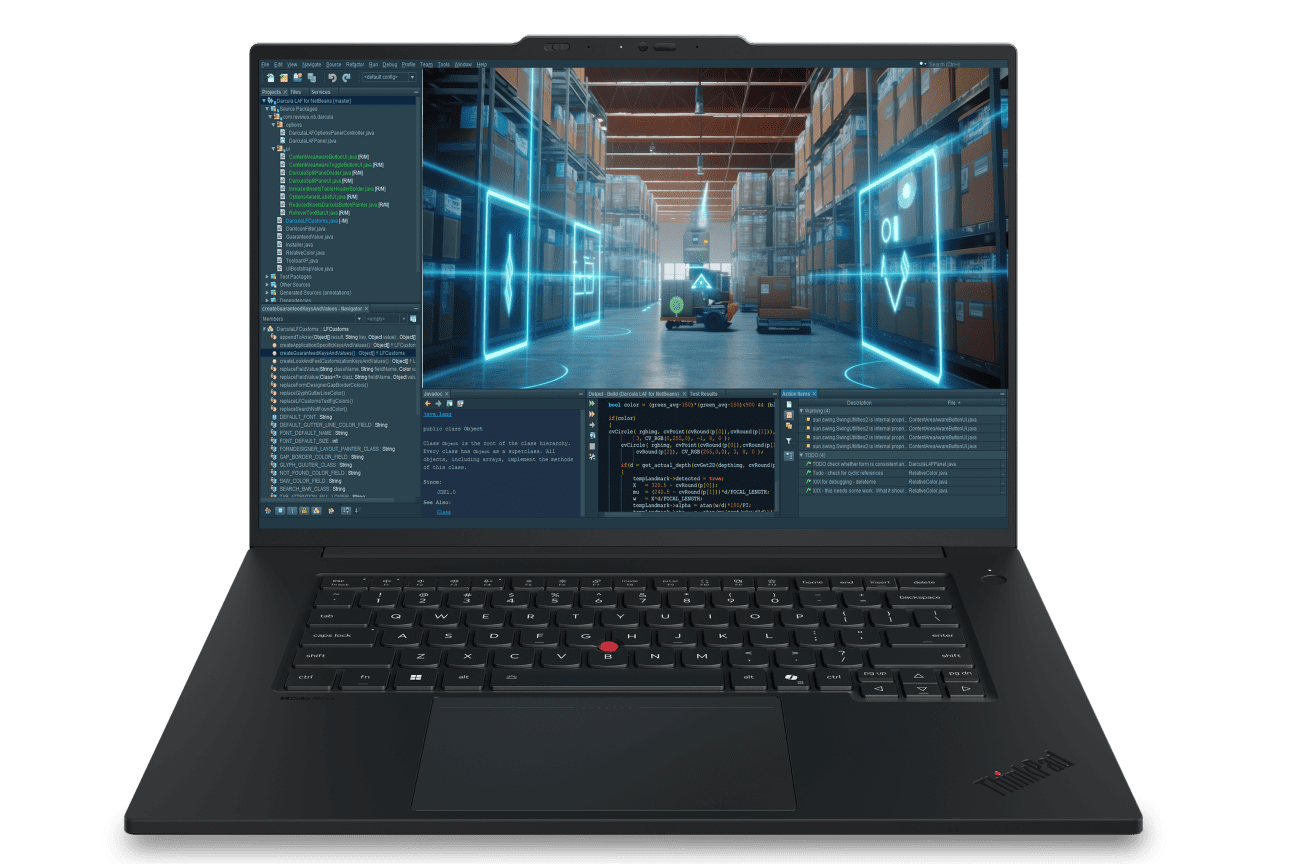
Let me translate this out of spec-sheet language. If you're running a ThinkPad P16s on a 90Wh battery today and getting roughly 8-9 hours of mixed productivity work, a same-size ED1000 cell could push that toward 10+ hours without adding a single gram to the chassis. Or Lenovo could keep the same runtime and shave millimeters off the thickness. Either way, you win.
The 99.9Wh capacity is also strategically perfect. Airlines restrict batteries to 100Wh for carry-on without special approval. Lenovo is packing the absolute maximum allowed energy into the smallest possible volume. That's the kind of engineering decision that shows someone on the product team actually travels for work.
The New ThinkPad P Series Lineup
Alongside the battery announcement, Lenovo refreshed its entire ThinkPad P workstation line with NVIDIA RTX PRO Blackwell GPUs. Here's what's coming:
**ThinkPad P14s Gen 7** — The ultralight option. Starts at 1.29kg with up to an AMD Ryzen AI 9 HX PRO 470 (12 cores, 5.2GHz), NVIDIA RTX PRO 1000 Blackwell with 8GB GDDR7, and 96GB of DDR5/LPDDR5x. Display options include a 14-inch 2.8K OLED. Available April 2026.
**ThinkPad P16s Gen 5** — The mainstream workhorse. Starts at 1.754kg, steps up to the RTX PRO 2000 Blackwell (8GB GDDR7), and offers a 16-inch 2.8K OLED panel. Battery ranges from 60 to 90Wh. Up to 658 TOPS of AI compute. Available June 2026.
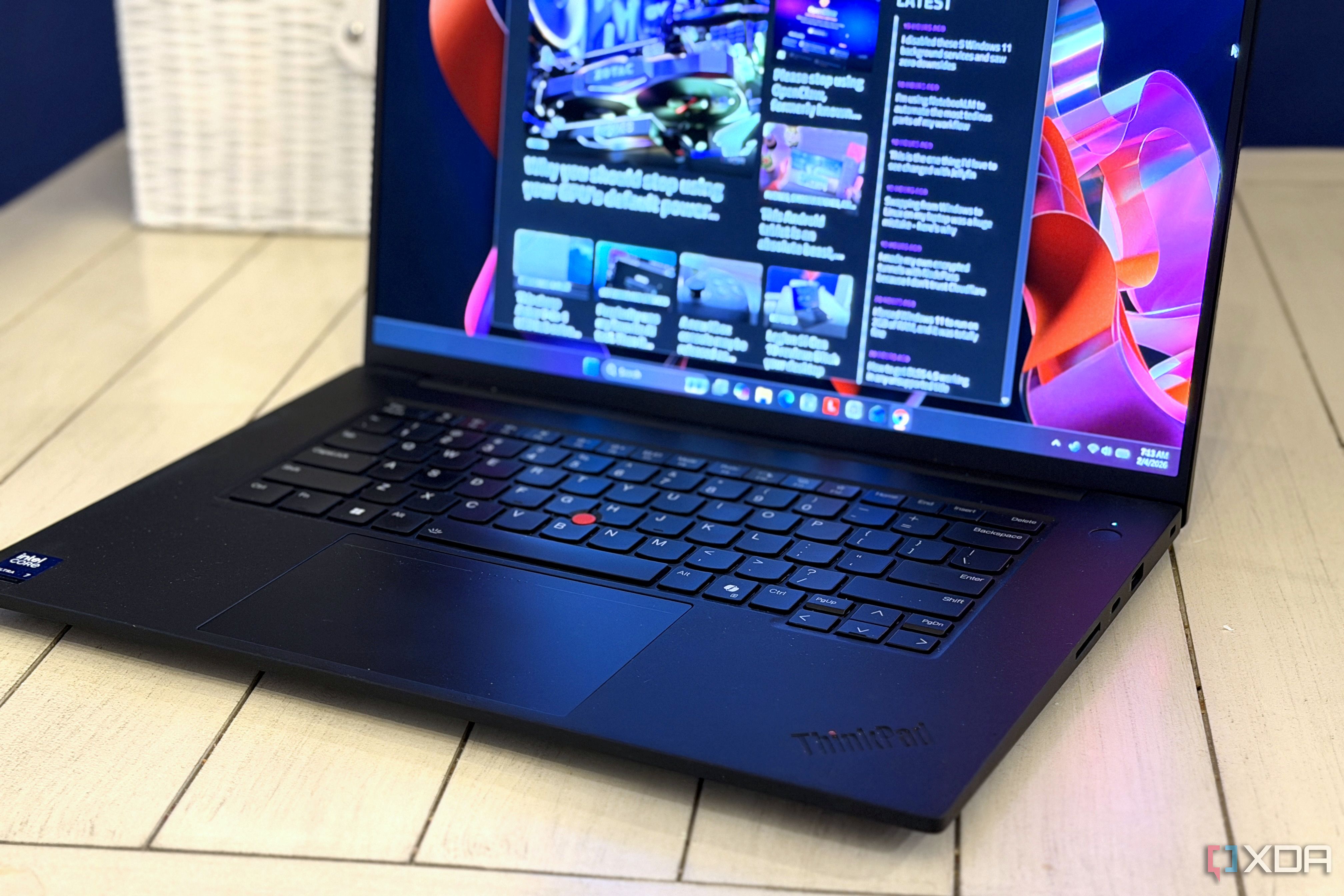
**ThinkPad P1 Gen 9** — The premium tier. Starts at 1.80kg with Intel Core Ultra Series 3 H-Series CPUs (16 cores, 5.1GHz), RTX PRO 2000 Blackwell, and a stunning 16-inch 3.2K Tandem OLED Touch display at 1500 nits HDR peak with 40-120Hz variable refresh. Up to 8TB storage via dual Gen5 M.2 slots. Ports include two Thunderbolt 5, one Thunderbolt 4, USB-A, and HDMI 2.1. Available June 2026.
All three support LPCAMM2 memory modules, which means user-replaceable RAM is back on the menu for ThinkPad workstations. That alone is worth celebrating.
The Caveat
Here's the honest part: the ED1000 battery is still a proof of concept. Lenovo hasn't confirmed which specific products will ship with it first, or when. The new ThinkPad P Series models announced at GTC will ship with conventional cells. So while the technology is real and demonstrated, you can't buy it yet.
That said, the fact that Lenovo is showing this at GTC alongside production-ready workstations suggests they're aiming for integration sooner rather than later — likely the next refresh cycle in 2027. For anyone who's ever rationed their screen brightness on a cross-country flight, that timeline can't come fast enough.
Bottom Line
The ThinkPad P Series refresh is solid — Blackwell GPUs, OLED displays, and Thunderbolt 5 are all welcome upgrades. But the ED1000 battery is the real story here. A 10%+ density improvement in the same form factor is the kind of boring-sounding spec that transforms the daily experience of actually using a laptop away from your desk. More runtime, same weight, same size. That's the upgrade road warriors have been waiting for.
Loading comments...