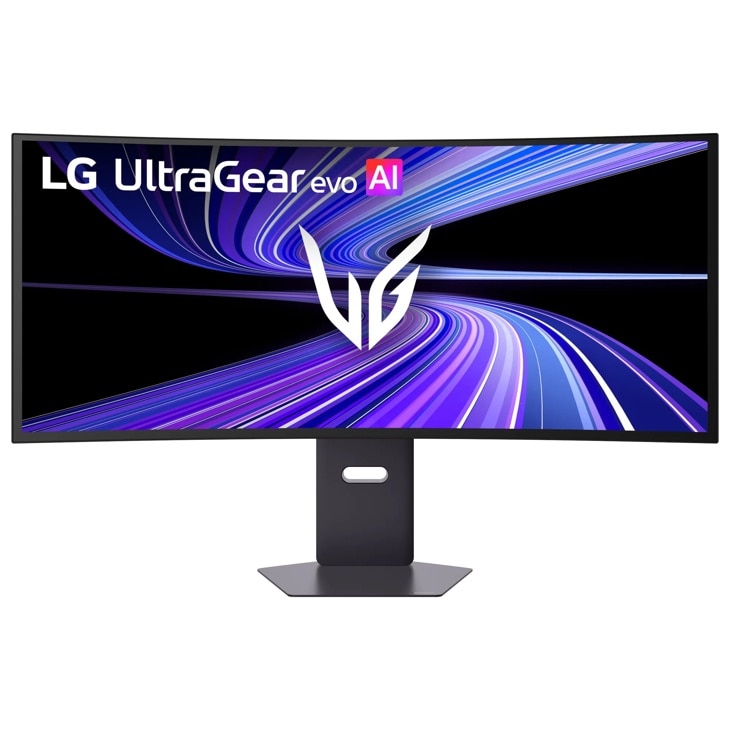
The First 5K2K OLED Is Actually Here
The LG UltraGear evo GX9 (39GX950B) started shipping the week of May 4th, and after years of panel manufacturers promising higher-resolution OLED, this is the moment of proof. A 39-inch, 5120×2160 4th Gen Tandem OLED at 165Hz — with a dual-mode switch to 330Hz at WFHD — is genuinely new territory. At 143 pixels per inch on an OLED substrate, the pixel density argument that has historically plagued large-format OLED displays finally collapses. This is a sharp panel.
4th Gen Tandem OLED: What the Generation Jump Actually Means
The "4th Gen Tandem OLED" label is not marketing shorthand for incremental polish. The RGB Tandem structure stacks emitter layers to extract more photons per pixel without sacrificing OLED's defining infinite contrast ratio. TFTCentral's measurements confirm the gains are real: SDR peak hits 335 nits, a 28% improvement over previous-generation WOLED panels. HDR peak reaches 1430 nits at a 10% APL window — 26% above the 45GX950A predecessor. For a DisplayHDR True Black 500 certified panel, this is comfortably overpowered, with headroom to spare.
Color accuracy is where this panel genuinely earns respect. DCI-P3 absolute coverage measures 99.7% — effectively complete. The sRGB mode delivers 95.6% absolute coverage with greyscale Delta E averaging 2.0, which is solid factory calibration. Select the optimized gamma preset (Mode 4) and greyscale Delta E drops to 1.1. That is professional colorist territory delivered inside a gaming monitor. If the colors are wrong, nothing else matters — and here, the colors are definitively right.
The AI Upscaling Problem
LG's marketing team has made AI Upscaling a centrepiece of the 39GX950B pitch — the ability to intelligently scale lower-resolution content to 5K2K without taxing your GPU. TFTCentral's verdict after testing: "very limited practical use cases." For PC gaming, the feature is essentially non-functional. It operates on media playback in narrow conditions. Wrapping an entire marketing campaign around a feature that does not work in the primary use case for a gaming monitor is the kind of thing that erodes trust. The frustrating part is that the actual panel performance makes AI Upscaling completely unnecessary — the 4th Gen Tandem OLED story is compelling enough on its own. Stop reaching for AI buzzwords when the display science does the heavy lifting.
Dual-Mode and the VRR Caveats
The dual-mode implementation — 165Hz at full 5K2K, 330Hz at WFHD (2560×1080) — is a pragmatic engineering compromise given DisplayPort 2.1 UHBR20 bandwidth ceilings. GPU-side DP2.1 support is still maturing in 2026, so 165Hz at native 5K2K is where most systems will land regardless. Variable refresh rate operation carries a known WOLED structural penalty: gamma-to-frame-rate correlation produces visible flicker in dark scenes during VRR operation. Low-level grey banding appears at 165Hz native and worsens at 330Hz. These are not unique to the 39GX950B — they are characteristic of WOLED at high refresh rates across all manufacturers — but they are present and will be visible in dark-environment gaming sessions.
Missing: Basic OLED Housekeeping
The omissions here deserve direct attention from anyone considering this purchase. The 39GX950B ships without pixel shift, logo dimming, or taskbar detection. On a $1,799 OLED panel, these are not optional quality-of-life extras — they are the minimum responsible ownership tools for a technology that accumulates differential aging under sustained static content. LG has quietly removed these safeguards with no mention in the spec sheet. If you buy this monitor, take the housekeeping into your own hands: dark mode taskbar at all times, display sleep timer set aggressively short, and avoid leaving static UI chrome on-screen during non-gaming sessions. The panel is excellent. The OLED stewardship features are an unacceptable omission at this price.
Verdict: The Panel Is Right. The Marketing Is Not.
At $1,799, the LG 39GX950B makes a serious ask and delivers serious panel technology in return. The 4th Gen Tandem OLED substrate is a genuine leap: 1430 nits HDR peak, 99.7% DCI-P3 absolute coverage, greyscale Delta E of 1.1 with the right preset, and 5K2K resolution at 143 PPI across 39 inches. TFTCentral's Recommended rating is the correct call. The caveats are real: AI Upscaling is vaporware for PC gaming, the missing OLED care features are a meaningful long-term risk factor, and VRR flicker in dark scenes is an ongoing structural limitation of the WOLED architecture. Buy this monitor for the panel technology. Ignore the AI Upscaling marketing. Set your display sleep timer. Enjoy the best greyscale Delta E you've ever seen on a gaming screen.
Loading comments...