Ruby Goes Mainstream
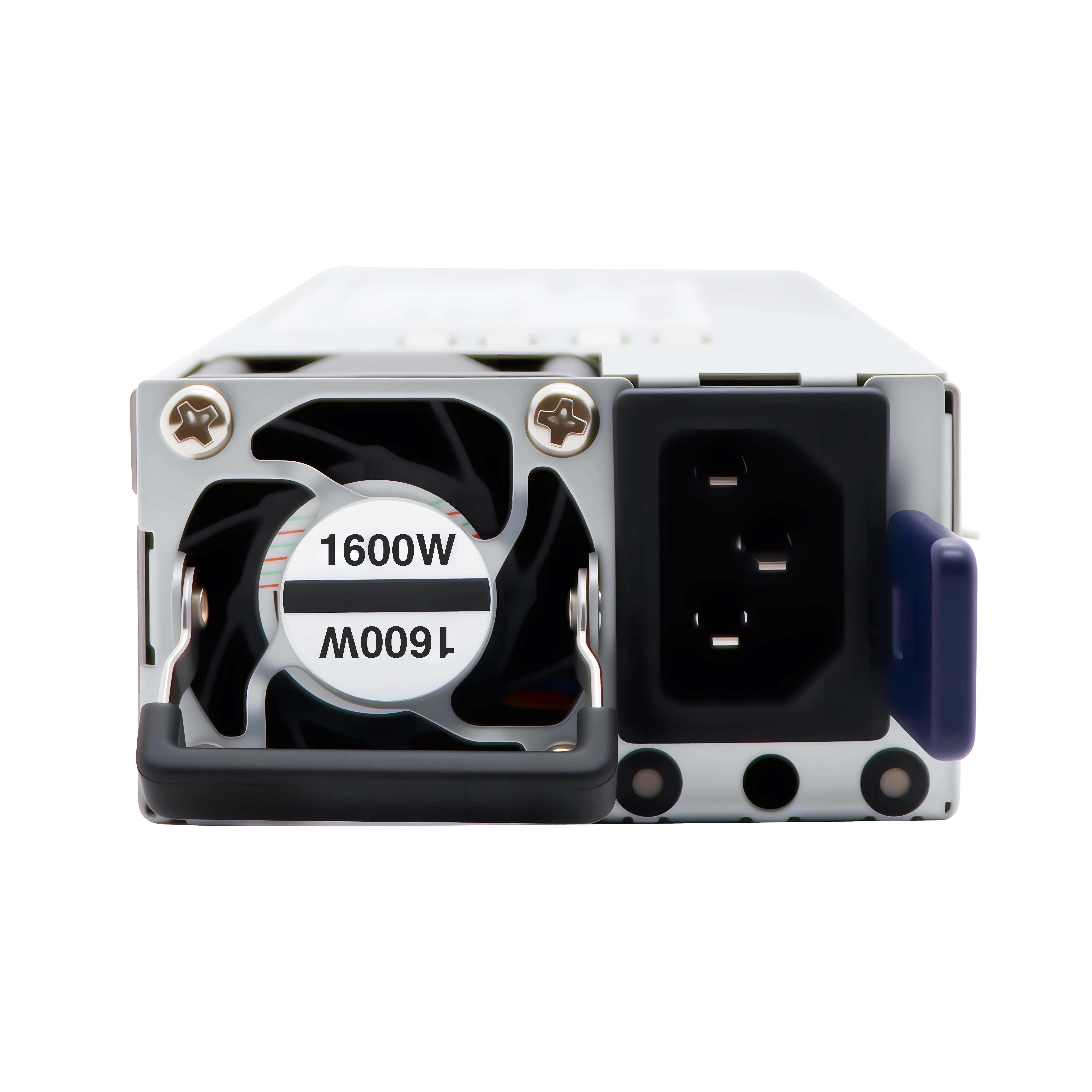
Linklieo announced its full 80 PLUS Ruby server PSU portfolio on April 23, spanning five tiers: 1600W, 2000W, 3200W, 4500W, and 5500W. All in the compact 73.5mm CRPS form factor pushed by OCP, all hot-swappable, all targeting the one workload that nobody can build power infrastructure fast enough for — AI.
This matters because Ruby isn't just a marketing badge. It's the first new 80 PLUS tier in 14 years, sitting above Titanium with a 96.5% efficiency target at 50% load on 230V — and crucially, demanding 90%+ efficiency across the entire load curve from 5% to 100%. That last part is where Titanium-class supplies typically fall apart. Ruby closes the loophole.
Why The Curve Matters More Than The Peak
Most spec sheets quote peak efficiency at 50% load because that's where every PSU looks its best. The reality in a hyperscale rack is that workloads bounce all over the curve — idle nodes at 5-10%, AI inference clusters cycling between 30% and 80%, training racks pinned near full load for weeks. A Titanium PSU rated 94% at 50% can drop to 87% at 10% load. Multiply that gap across 50,000 PSUs and you've burned the GDP of a small country in waste heat.
Linklieo's published numbers tell the story: 92.12-92.79% efficiency at just 5% load, no-load draw between 3.05W and 8.81W, and a power factor that exceeds 0.99 at 20% load and approaches 0.999 at full load. That last figure is borderline absurd — you could feed these things into a utility metering audit and not flinch.
The Thermal Design Problem Just Got Easier — And Harder
Here's the engineering reality: every percentage point of efficiency you claw back is a percentage point of waste heat you don't have to extract from the rack. A 5500W PSU at 92% efficiency dumps roughly 478W into the chassis as heat. The same unit at 96.5% drops that to 199W. That's less than half the cooling load — per supply — and there can be six or eight of these in a single AI server.
But Ruby's higher efficiency comes from tighter component selection, GaN or SiC switching stages, and synchronous rectification working harder than ever. Those topologies are *less* tolerant of poor airflow. Hit one with recirculated hot air and the efficiency curve collapses, derating kicks in, and your hyperscale rack starts throttling. Airflow is not optional, it's physics — and Ruby supplies are more sensitive to it, not less.
CRPS, Hot-Swap, and Why Form Factor Still Wins
The CRPS spec exists because operators got tired of vendor-locked PSU bays. Linklieo committed to the full standard width across all five tiers, which means a 1600W unit and a 5500W unit drop into the same chassis bay. That's the kind of boring infrastructure decision that saves operators millions in spares logistics and lets them re-rate a rack from cloud workload to GPU workload without ripping the power shelf out.
Redundant N+1 or N+N configurations are table stakes here. The hot-swap implementation lets you yank a failed supply at 3am without dropping the load, assuming your distribution math was correct.
What This Means for Enthusiast Builds
Nothing, directly. CRPS PSUs don't fit a Lian Li O11 and they're loud as a jet engine because the fan curves are tuned for 40°C inlet air at 100% load. But this is the leading edge of where consumer PSUs go in 3-5 years. Today's 80 PLUS Titanium desktop supplies trace their lineage to data center designs from 2015. Expect to see Ruby-class topology — GaN switching, sub-1W standby, near-unity power factor — trickle into the high-end desktop market by 2028. Your next 1000W ATX 3.1 PSU will be quieter, cooler, and almost certainly more efficient because of work being done in the CRPS market right now.
In the meantime, this is the hardware that's keeping the AI buildout running without melting the grid. Worth paying attention to.
Loading comments...