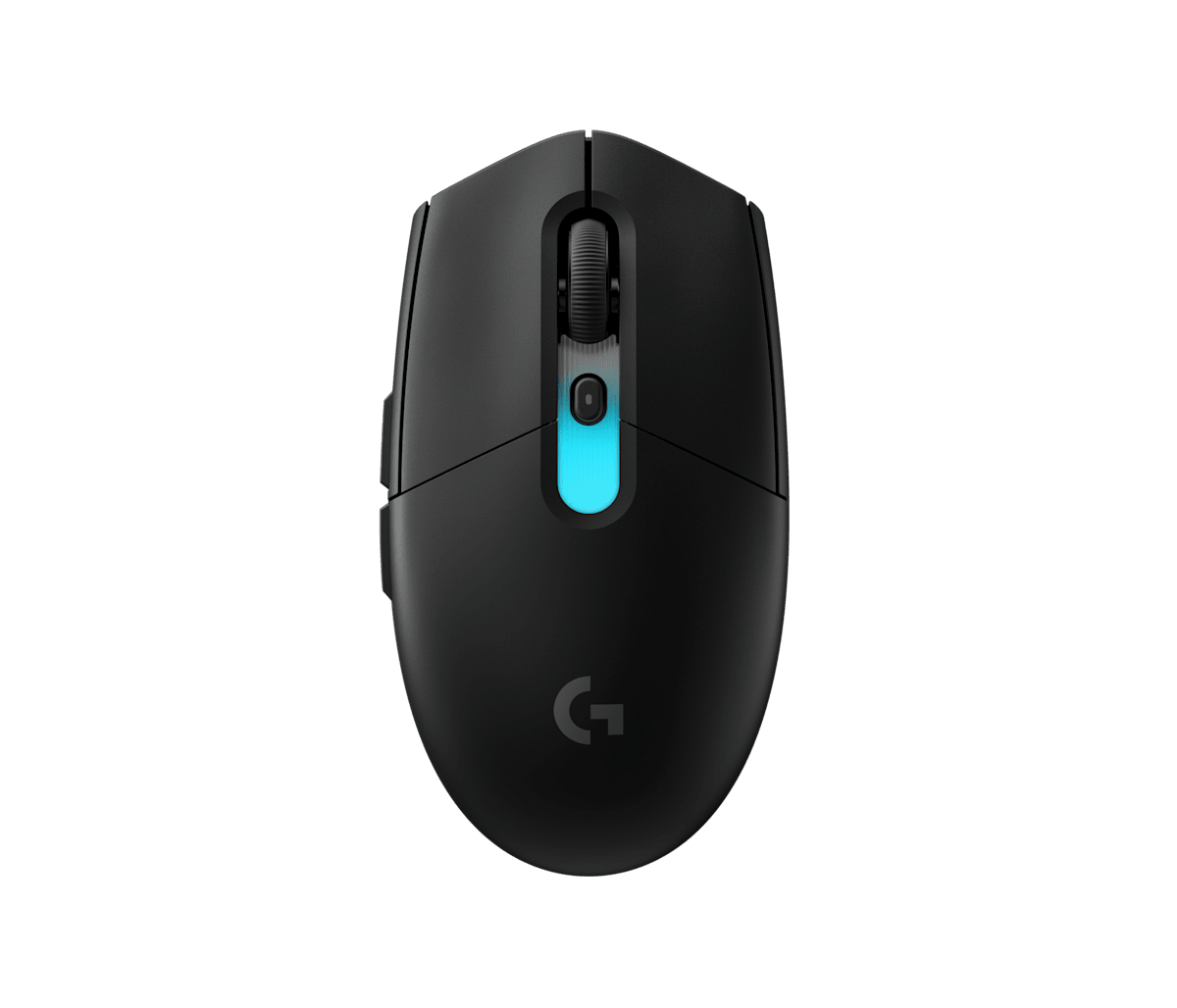
The Budget Tier Just Got Lethal
For the better part of a decade, the Logitech G305 was the answer to one question: what's the best competitive wireless mouse under $50? That era ended when the rest of the market moved to HERO sensors, sub-60g weights, and USB-C charging — but Logitech kept selling the AA-powered original anyway, year after year. On June 30, 2026, that version of history officially died. The G305 X SUPERLIGHT launched at $79.99 with the HERO 44K sensor, 8 kHz polling capability, and a weight of 59 grams. Every millisecond is a missed headshot, and at this price, there is no longer any excuse.
40 Grams of Dead Weight, Gone
The original G305 weighed 99 grams — AA battery stuffed inside a plastic shell that had not been redesigned since 2018. That is not ultralight. That is a brick in competitive disguise. The G305 X SUPERLIGHT cuts to 59 grams by ditching the AA entirely for a built-in rechargeable cell with USB-C. The shape is still the same compact, neutral form that suited claw and fingertip grippers, but now it weighs less than the Razer Viper V3 Pro costs to compete with and half of what you would pay for the G Pro X SUPERLIGHT 2 DEX.
At 59g, arm fatigue disappears across long aim-training sessions. Low-sens CS2 players who drag across the full pad will feel the difference immediately. Flick shots in Valorant become more consistent when the mouse stops fighting the motion. The shape is intentionally compact — large-handed palm-grip players will want to look elsewhere — but for medium-to-small claw and fingertip grippers, this is the sweet spot.
HERO 44K at $80 — Logitech Just Devalued Their Own Flagship
The HERO 44K sensor — 44,000 DPI ceiling, 40G acceleration, 678 IPS tracking — previously lived exclusively in Logitech's $160 G Pro X SUPERLIGHT 2 line. Now it is in an $80 mouse. That is not a minor concession. That is Logitech explicitly conceding that sensor performance is no longer a differentiator worth a 100% price premium. From a pure sensor standpoint, the G305 X SUPERLIGHT and the Pro X SUPERLIGHT 2 deliver identical inputs to your game.
The real differences are shape, button quality, and build refinement. The Pro X SUPERLIGHT 2 has a more polished scroll wheel, better side button tactility, and a shape tuned for larger palm and claw grippers. The G305 X is compact and slightly more budget in its click feel. Know your hand size and grip style, then pick accordingly — the sensor is no longer the deciding factor.
8 kHz Polling: The Catch Everyone Needs to Know
Here is the fine print competitive players must understand: 8 kHz polling on the G305 X SUPERLIGHT requires the PRO LIGHTSPEED receiver, sold separately. Out of the box with the bundled dongle, you are running at 1 kHz — 1 ms input quantization. That is still clean, but if you have ever played on a proper 8 kHz setup, the difference in cursor smoothness on a 360 Hz panel is real and perceptible during fast flicks.
The upgrade receiver pushes the true all-in cost above $80. Logitech should have included it at this price point. They did not. It is the one move that prevents this from being an unambiguous slam dunk against the competition, including value-tier 8K offerings from MSI that bundle the high-polling dongle in the box. If you can absorb the extra cost of the PRO receiver, do it — 8 kHz changes how the cursor path feels at 360 Hz and above, and it eliminates the last perceptible latency gap between mouse and display.
The Right-to-Repair Mouse Nobody Expected
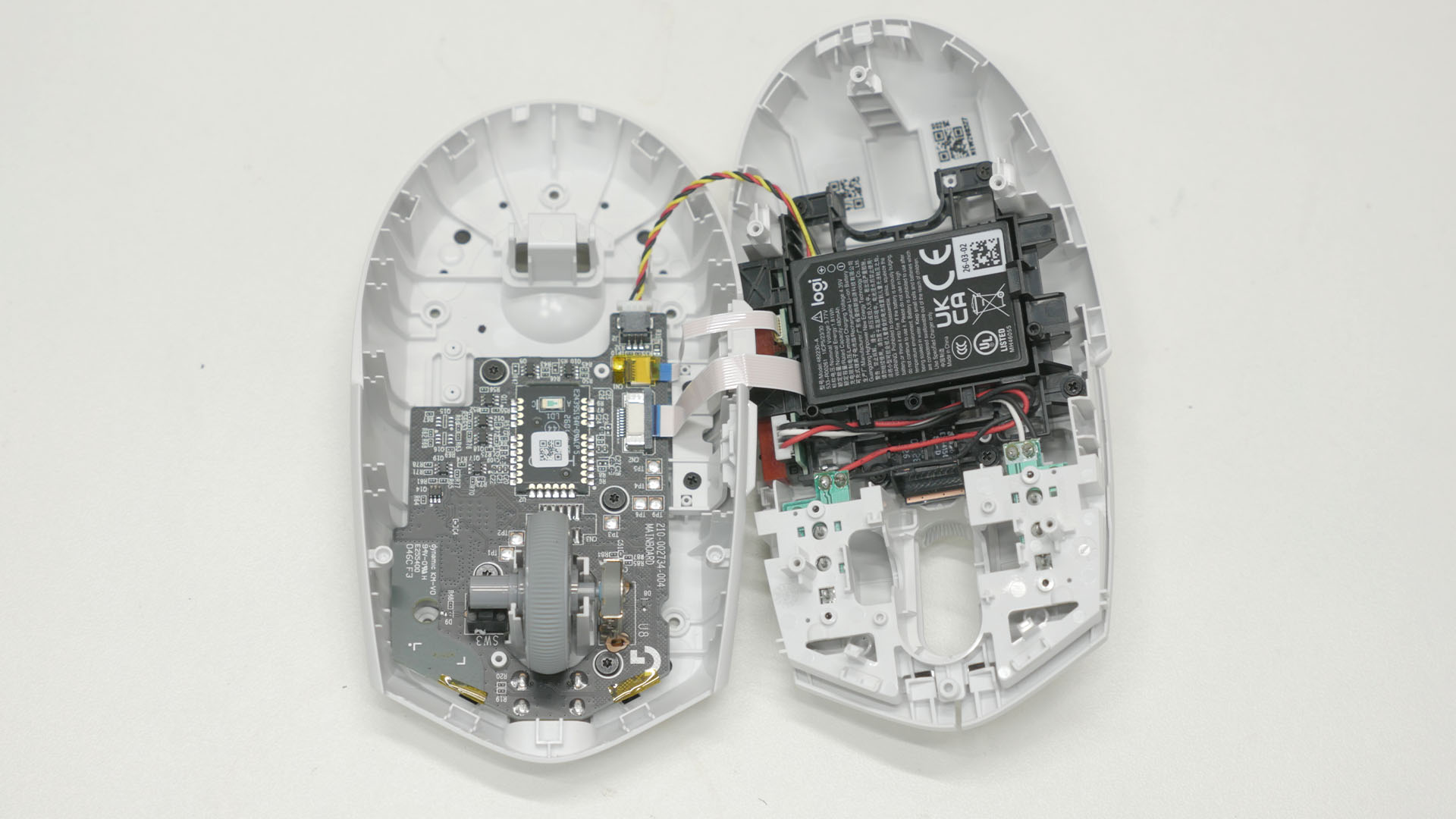
The G305 X SUPERLIGHT ships with exposed screws and a stated commitment to Right to Repair — an unusual move in the gaming peripheral space. It is also built with a minimum of 51% recycled plastic. For competitive players who log hundreds of hours of aim training annually, the ability to open the shell and swap switches or replace worn mouse feet without destroying the housing matters. Logitech is betting this crowd will hold onto a mouse longer if they can service it.
The battery specs are legitimately impressive: 130+ hours total on a charge, and Logitech claims 3.5 hours of usable playtime from a 2-minute USB-C top-up. Forget to charge before a session? Two minutes on the cable covers a full ranked queue. Weekly charging is sufficient for heavy daily users, which puts it comfortably ahead of most competitors in the 95-hour range.
Verdict: Buy This, Stop Making Excuses
The G305 X SUPERLIGHT is the competitive mouse the community has demanded at the price it has always refused to pay. The HERO 44K sensor performs identically to what ships in the $160 Pro X SUPERLIGHT 2. The 59g weight is genuinely ultralight without the exotic materials and premium markup of boutique options. The Right-to-Repair design and USB-C charging are features that should have arrived years ago and are finally here. The missing bundled PRO receiver is a real knock, and large-handed palm-grip players need a different shape entirely. But if you are still gaming on a 99-gram G305 with three rounds of AA batteries behind it, your upgrade has finally arrived. Every millisecond is a missed headshot — and $79.99 just bought you a lot of them back.
Loading comments...