Wait, Both? In the Same Board?
For the last three years the gaming-keyboard world has been doing this weird either/or dance. Either you bought a Hall effect or TMR analog board with adjustable actuation, rapid trigger, and SOCD — and you typed on switches you didn't pick — or you bought a hot-swap mechanical board with switches you actually liked and gave up on the analog stuff entirely. Wooting fans on one side, custom-build folks on the other, and a no-man's-land in the middle where nobody was building the obvious thing.
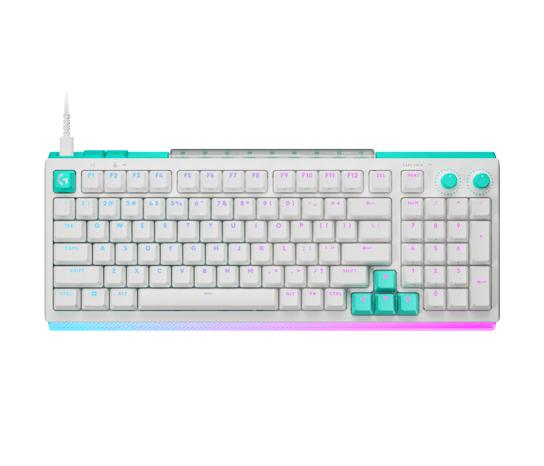
Well, Logitech just built the obvious thing. The new G512 X, which started shipping at LogitechG.com on April 28 and hit global retail May 2, is the first mainstream keyboard with sockets that accept *both* magnetic analog switches and standard 3-pin/5-pin mechanical switches. All 39 of them. In any combination you want. Logitech is calling it Dual Swap, and out of the box the keyboard ships with magnetic analog switches under WASD and tactile mechanical switches everywhere else.
Let that sit for a second. The competitive movement keys get rapid trigger, adjustable actuation, and analog SOCD. The rest of the board gets switches that actually feel like switches. That's the build half this community has been doing in spreadsheets for two years, finally on a shelf at Best Buy.
The TMR Bit Actually Matters
Logitech is making a big deal of the TMR sensor underneath, and for once the marketing department has picked the correct hill. Tunnel Magneto Resistance sensors are genuinely a step up from the Hall effect units that dominate the analog scene. They're more linear at low travel distances, drift less with temperature, and — critically — they hit Logitech's spec of 0.125 ms input-to-poll latency at 8 kHz without breaking a sweat.
Actuation is adjustable from 0.1 mm to 4.0 mm under the magnetic keys, which is the standard you expect now, but the SAPP Rings (Logitech's name for dual-action key mapping) let you assign two distinct actions to a single magnetic key based on press depth. Tap W lightly to walk, mash it to sprint, that sort of thing. Wooting has shipped this for years; the difference is Logitech is shipping it to the audience that buys at Costco.
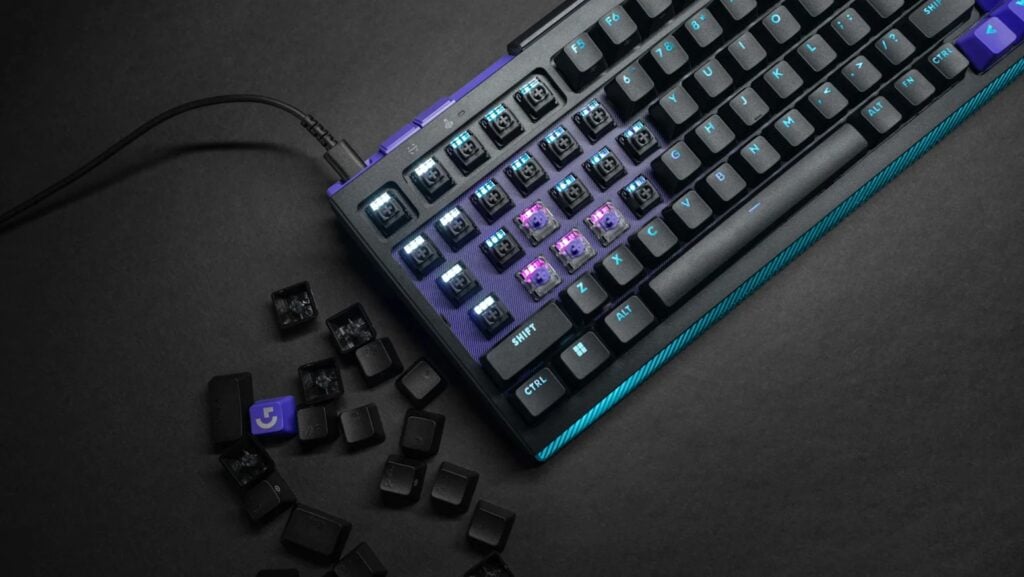
The mechanical sockets are bog-standard hot-swap. 3-pin or 5-pin, north or south facing, doesn't matter. If you've got a tray of switches sitting on your desk — and if you're reading this you absolutely do — they'll drop in. Lubed Holy Pandas under the alphas, MX Browns in the modifiers, magnetic Gateron KS-20s under WASD: a config that was a 200-message Discord thread six months ago is now Tuesday-night plug-and-play.
Sound, Build, and the Stuff Reviews Will Argue About
Here's where I have to put on the skeptic hat. Mainstream gaming boards have a sound problem. Always have. Hollow plastic cases, plate-mount sockets, no foam, stabilizers that rattle out of the box — every gaming keyboard in this price bracket sounds like a lunch tray no matter what switches you put in it. Thock is a feeling, not a sound, and a board with a tinny case isn't going to feel right with any switch on earth.
Logitech's spec sheet says "reinforced aluminum frame," gasket-style mounting, factory-lubed stabilizers, and two layers of damping foam between the PCB and the bottom case. On paper, that's the right list. In practice, every gaming brand says "reinforced aluminum frame" and means "aluminum top plate over a plastic tub." I'll reserve judgment until somebody does a teardown — and given the hot-swap design, those are coming this week. The early hands-on at TechRadar already noted the 75-key version sounds noticeably better than the older G513, but called it "firm and clacky rather than thocky," which tracks with a plate-mount design at this price.
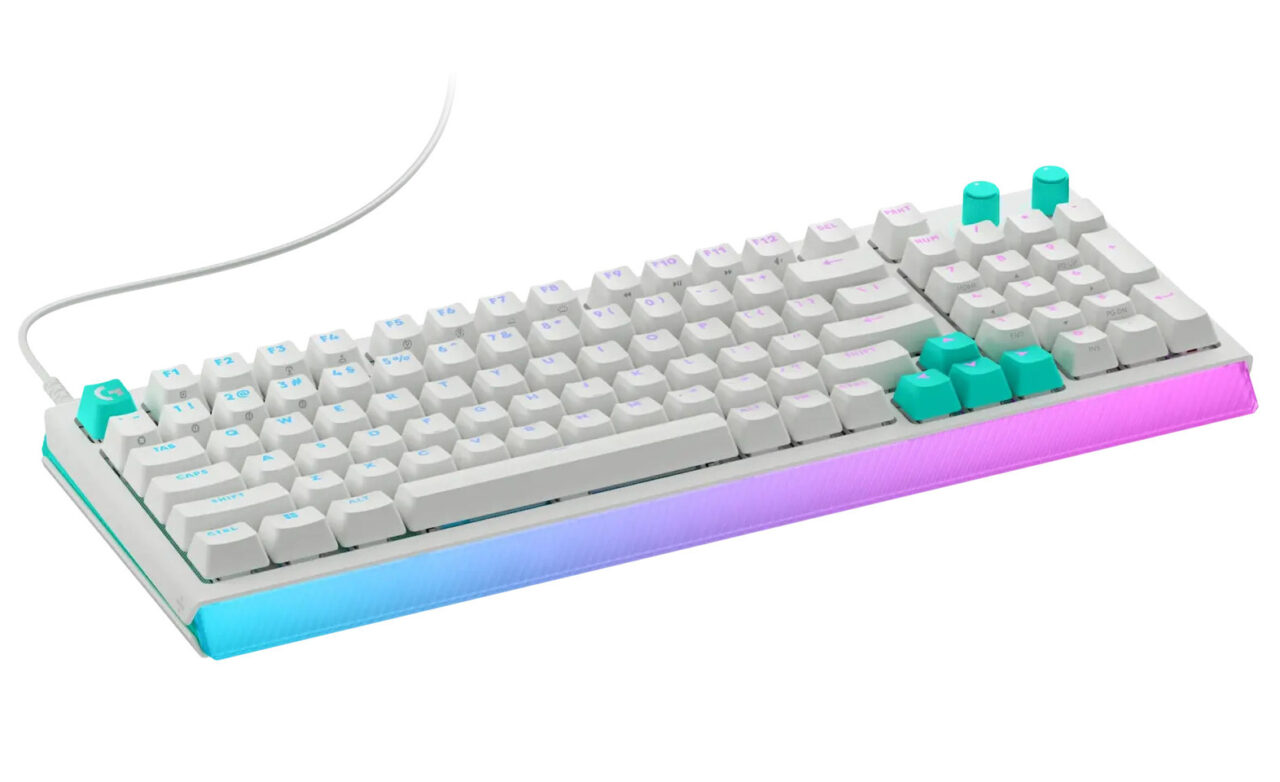
The two SKUs are $179.99 for the 75% layout and $199.99 for the 98-key (which is essentially a 1800-compact, full nav cluster minus the gaps). Both come with PBT double-shot keycaps in the now-standard MX-cherry profile, USB-C detachable cable, and a volume roller. No wireless. No 8K wireless mode. No QMK or VIA — you're on Logitech G HUB, which has gotten genuinely usable in the last year but is still G HUB.
Who This Is Actually For
If you already own a Wooting 60HE+ or a Keychron Q1 HE, this isn't your upgrade path. The hardcore analog crowd is going to find the firmware too locked-down, and the hardcore custom crowd is going to find the case too plate-mount-y. Fine. That's not the market.
The market for this is the player with one keyboard slot on their desk who wants competitive analog under WASD without committing their entire board to magnetic switches that feel weird for typing. The market is also the person who has been hot-swapping mechanical switches for two years and is curious about TMR but isn't going to drop $250 on a second keyboard to test it. For those people, the G512 X is the cheapest legitimate way into hybrid territory and the first mass-market product to acknowledge that switch preference and analog tech don't have to be a package deal.
Logitech also dropped a hint that the hybrid sockets will come to the wireless G915 X line later in 2026. If they pull that off without ruining battery life — TMR scanning is meaningfully more power-hungry than mechanical — that's the actually-interesting product. The G512 X is the proof of concept; the G915 X with this socket design is the one I'll be queuing up to buy.
The Bigger Shift
Until now, every analog gaming keyboard treated the switch as a sealed component of the platform. Want different feel? Buy a different keyboard. The G512 X is the first board to admit that switch preference is personal and analog response is a sensor problem, and those two things should never have been bundled together in the first place.
The enthusiast scene figured this out years ago — it's just that the tools to build a hybrid board didn't exist outside of one-off PCB projects on Geekhack. Now they do, and they're sitting in a Logitech box with a two-year warranty. That's a meaningful change, even if the first execution is going to have rough edges.
Get one in for review, plug in your favorite linears under the alphas, leave the analog under WASD, and tell me with a straight face that this isn't where every gaming keyboard should have been three years ago. I'll wait.
Loading comments...