The RTX 5090 Connector Problem Never Really Went Away
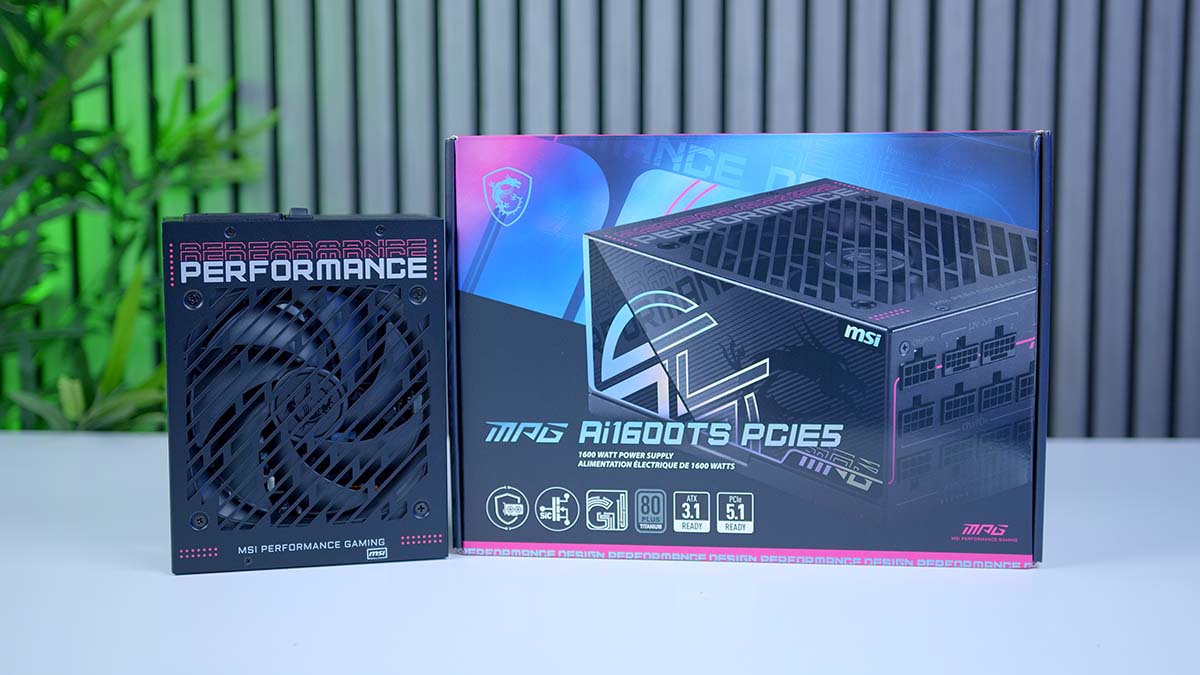
Since the RTX 4090 cable melting saga of 2022 and the repeat scares with early RTX 5090 builds, the industry has been looking for a hardware-level fix rather than a firmware band-aid. MSI's answer with the MPG Ai1600TS PCIE5 is blunt and effective: put current monitoring directly into the PSU, watch both 12V-2x6 connectors in real time, and if something looks wrong, warn the user and shut the system down in a controlled way before anything catches fire. That's GPU Safeguard+, and it's the most interesting thing to happen to PSU safety design in years.
GPU Safeguard+: What It Actually Does
The implementation is straightforward but the implications are significant. The Ai1600TS carries two independent 12V-2x6 connectors, each rated for 600W continuous. GPU Safeguard+ watches current draw on both simultaneously. If it detects anomalous draw — overcurrent, sustained transients, or conditions that suggest a connector is improperly seated — it triggers a warning sequence: an audible beep, an on-screen notification, and a three-minute countdown before forced shutdown. You don't get a silent instant-off; you get a window to save your work and investigate. After three minutes, if you haven't resolved the issue, it cuts power and protects everything downstream. This is exactly the kind of engineering discipline that was missing when the 12VHPWR connector was being specced. Airflow is not optional, it's physics — and apparently, neither is proper connector monitoring.
Titanium Efficiency: The Math That Matters
At 1600W with 80 Plus Titanium certification, the Ai1600TS hits a minimum of 96% efficiency at 50% load (800W) and 94% at 20% load (320W). That gap between Gold and Titanium isn't marketing fluff — at 800W continuous draw in a high-end gaming rig, the difference between 90% (Gold) and 96% (Titanium) efficiency means roughly 53W of extra heat generated inside your case with a Gold unit versus just 33W with the Titanium. That's 20W of heat you don't have to cool, all day, every day. Over a year of moderate gaming use, it also translates to real money on your electricity bill. The unit carries Cybenetics Platinum and PPLP Titanium ratings as well, and operates in Zero Fan mode at low loads — the 135mm FDB fan only spins up when thermals demand it.
Physical Reality: 190mm Is a Lot of PSU
The spec sheet reads 150 x 190 x 86mm. That 190mm depth is the catch — most ATX cases spec 160-170mm for PSU clearance, and the extra 20-30mm will foul cable management in anything that isn't a full tower or a case with a generous PSU tunnel. Check your case specs before ordering. The dual 12V-2x6 cables are a non-negotiable requirement for any dual-GPU or extreme single-GPU build, and MSI ships both with the unit. The 10-year warranty is the longest in the segment and reflects confidence in the capacitor spec — Japanese primary caps are the safe assumption at this price point.
Dual 12V-2x6 Means Room for Everything
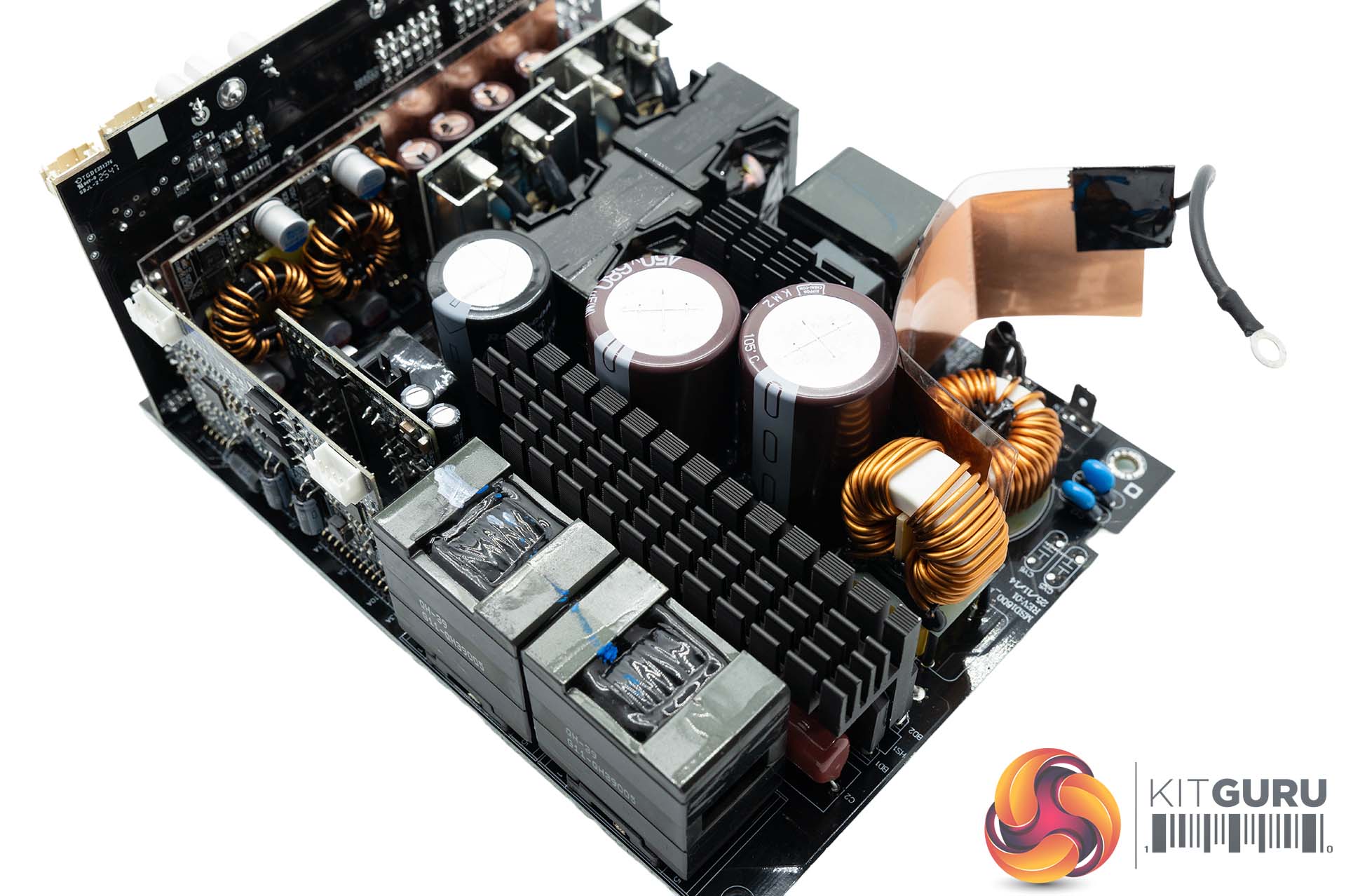
With 1600W on tap and dual 600W 12V-2x6 connectors, this PSU is specced for configurations that don't quite exist yet at scale — dual RTX 5090 SLI is effectively dead, but workstation builds with an RTX 5090 (575W) alongside a high-TDP CPU (125-250W) plus NVMe array, capture cards, and heavy PCIe peripherals will come close to justifying the headroom. For a single-GPU gaming build, even an RTX 5090 leaves you with well over 800W of margin. The segmentation here is clear: this is a PSU for people who run compute, rendering, or AI workloads locally on consumer hardware and need both the wattage and the protection.
Price and the Market Position
At approximately $500, the Ai1600TS slots into the premium tier of the high-wattage PSU market. That's steep, but the combination of Titanium efficiency, GPU Safeguard+, dual 12V-2x6 at 600W each, ATX 3.1 / PCIe 5.1 compliance, and a 10-year warranty makes it defensible. The alternatives — Seasonic Prime TX-1600, Corsair AX1600i — are competitive on efficiency but don't offer the active connector monitoring. If you're running an RTX 5090 and you've lost even one night of sleep over connector temps, the GPU Safeguard+ feature alone closes the value argument. GeekaWhat scored it 4.6/5 and called it a standout in the segment. Hard to argue with that assessment.
Loading comments...