8,000 Hz for Sixty Bucks
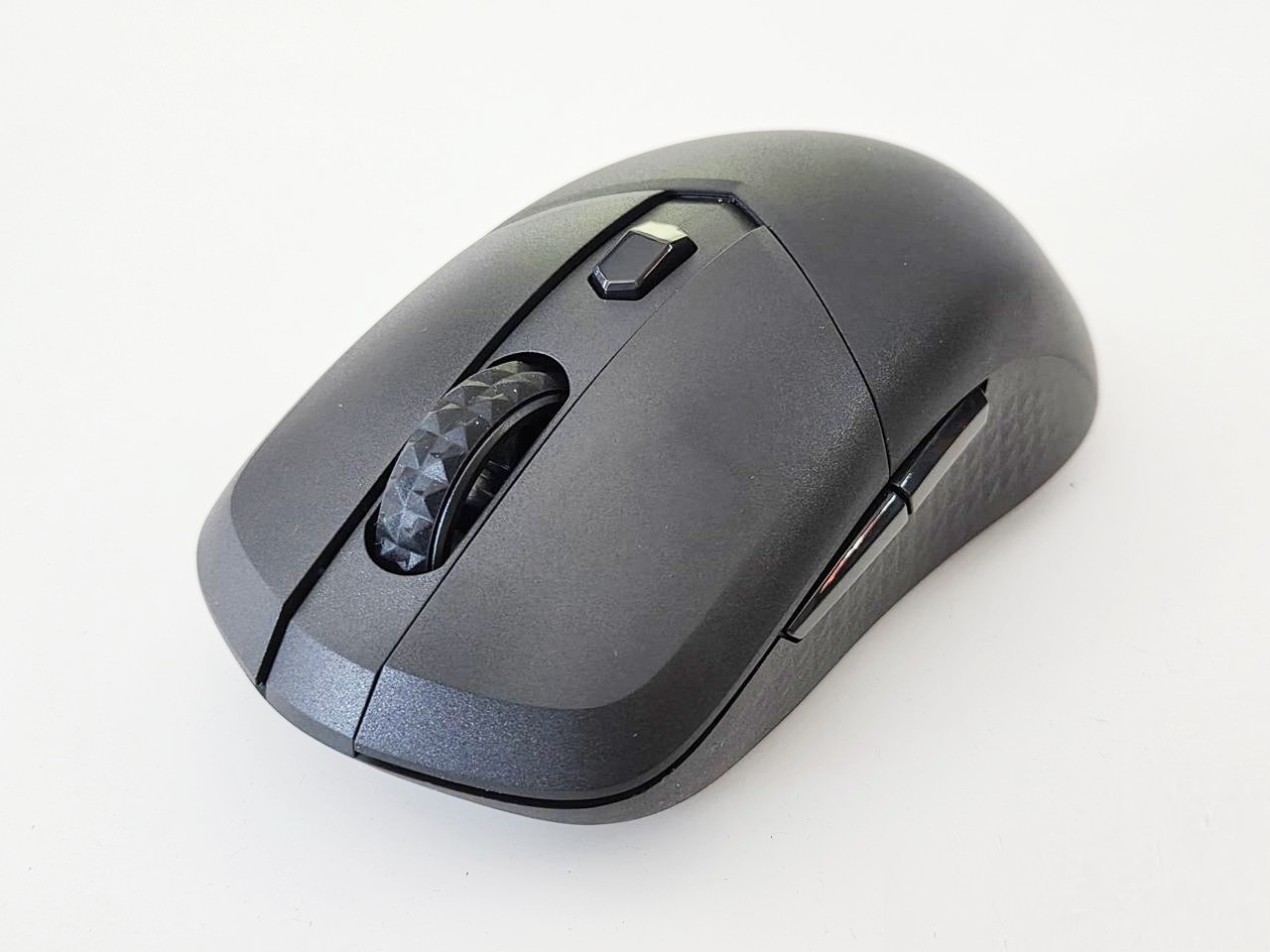
The 8K polling rate arms race has a new contender, and it's coming in at a price point that should make Razer and Logitech nervous. MSI just launched the Versa 300 Wireless 8K — a 66-gram wireless gaming mouse with an 8,000 Hz polling rate, PixArt PAW3395 sensor, and a sticker price of $59.99. That's roughly half what most competitors charge for wireless 8K.
For context, the Razer DeathAdder V3 HyperSpeed sits around $90-100, and Logitech's G Pro X Superlight 2 with 4K polling dongle runs $160+. MSI isn't just entering the 8K space — they're blowing the pricing wide open.
The Spec Sheet
Let's break down what MSI is packing into this shell:
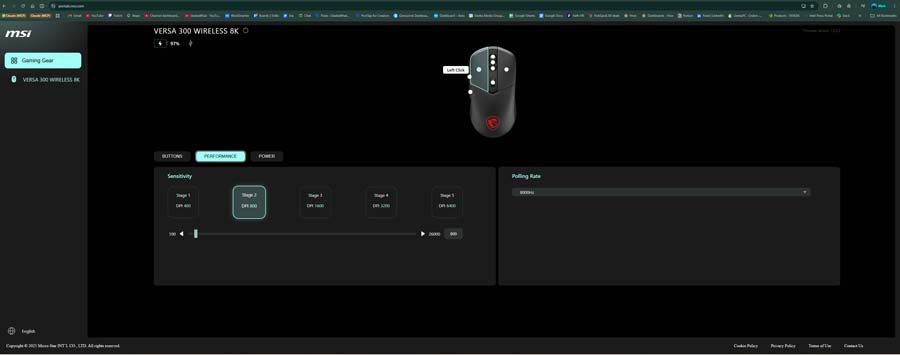
- **Sensor:** PixArt PAW3395 — the same proven sensor found in mice costing twice as much. 26,000 DPI max, tracks on virtually any surface, sub-millimeter precision at competitive DPI ranges (400-1600) - **Polling Rate:** 8,000 Hz via MSI's SwiftSpeed 2.4 GHz wireless dongle — that's 0.125 ms input latency, down from 1 ms at standard 1,000 Hz - **Weight:** 66 grams without cable — competitive with the current lightweight wireless meta - **Switches:** Omron optical switches rated for 60 million clicks — no debounce delay, no double-click degradation over time - **Battery:** Up to 196 hours — though that figure is with RGB off and likely at 1,000 Hz. Expect significantly less at 8K - **Connectivity:** Tri-mode — 2.4 GHz wireless, Bluetooth 5.3, or USB-C wired - **Shape:** Symmetrical, 125 x 64 x 41 mm, diamond-patterned anti-slip side grips
Does 8K Hz Actually Matter?
This is the question that divides the competitive community, so let me give you the straight answer: it depends on your level and your display.
At 1,000 Hz, your mouse reports its position every 1 ms. At 8,000 Hz, that drops to 0.125 ms. The difference is most visible on 360 Hz+ displays during fast flick shots — the cursor path becomes noticeably smoother, and there's a subtle but real reduction in the perceived gap between mouse movement and on-screen response.
For the average player on a 144 Hz display? The difference between 1K and 8K is nearly imperceptible. But if you're on a 360 Hz or 500 Hz panel and playing competitive shooters at a high level, the smoothness improvement is legitimate. Several pro CS2 players have already made the switch to 4K or 8K polling, and the trend is accelerating.
The tradeoff is CPU overhead. Each polling event consumes a small amount of CPU time, and at 8,000 Hz, that adds up. On older or weaker CPUs, running 8K polling can actually increase frame time variance and hurt performance. You want at least a modern 6-core chip before enabling 8K full-time.
PAW3395: Still the Sweet Spot
Some might note that the PAW3395 is not the absolute newest sensor in PixArt's lineup — the PAW3950 exists in a few flagship mice with native 8K support baked into the sensor itself. But the 3395 remains the competitive standard for good reason: it's been tuned and validated across hundreds of mice, its tracking characteristics are well-understood by pros, and its spin-out resistance and low-speed tracking are excellent.
The lift-off distance sits at the standard 1-2 mm range, and DPI accuracy is within PixArt's typical tight tolerances. You're not giving up sensor performance by choosing this over the 3950 — just some future-proofing.
The PortalX Problem
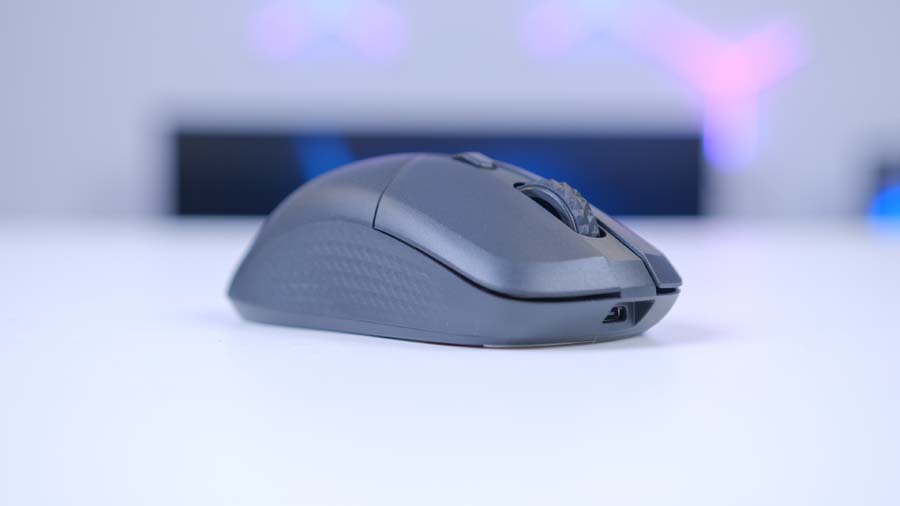
GeekaWhat's review gave the Versa 300 Wireless 8K a 3.8 out of 5, and the primary pain point is software. MSI uses PortalX, a browser-based configuration tool, instead of traditional desktop software. The idea is sound — no bloatware, runs anywhere — but the execution still needs work. Reviewers noted missing features and usability issues that hold the mouse back from its full potential.
For competitive players who just want to set their DPI and polling rate once and never touch software again, this is a non-issue. For tinkerers who want granular button mapping, macro support, and per-game profiles, PortalX might frustrate.
Symmetrical Shape: Ambi Players Rejoice
The symmetrical design is a deliberate choice for the competitive segment. It accommodates right-handed, left-handed, and ambidextrous grips across palm, claw, and fingertip styles. The 125 mm length and 66 g weight put it in the medium-small category — a comfortable daily driver for most hand sizes, though large-handed palm grippers might want something with more rear hump.
One caveat: the side buttons are positioned for right-hand use, so left-handed players won't get full functionality despite the symmetrical shell.
The Verdict: Price-to-Performance King
MSI has done something genuinely disruptive here. The Versa 300 Wireless 8K delivers flagship-tier specs — 8K polling, PAW3395, sub-70g weight, optical switches — at a price point that was previously reserved for basic 1,000 Hz wireless mice. The software needs polish, and the shape won't suit everyone, but as a pure value proposition for competitive gaming, nothing else comes close right now.
If you're running a high-refresh display and want to try 8K polling without spending $150, this is the mouse to buy. The 8K tax just got abolished.
Loading comments...