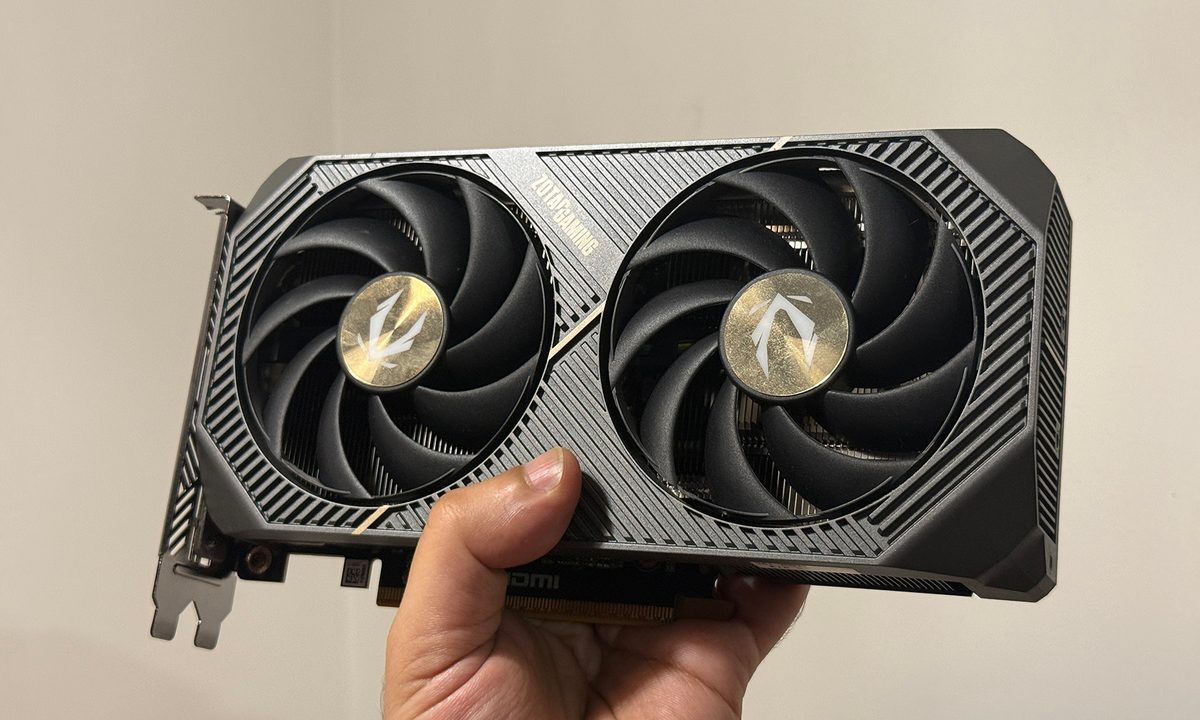
The "Forbidden Review"
On May 19, the RTX 5060 hit shelves at $299 with zero independent reviews available — not because there wasn't enough time, but because NVIDIA never supplied pre-release drivers to its usual press partners. GamersNexus, Hardware Unboxed, and other major outlets had review hardware sitting on desks with no drivers to test. NVIDIA's workaround? Selectively give early driver access to outlets willing to publish DLSS 4 Multi Frame Generation previews dressed up as performance coverage. The message was clear: if you want access, cover the marketing story, not the benchmarks.
GamersNexus wasn't having it. They were in Taiwan for Computex anyway, bought an RTX 5060 at retail, and published what they called the "Forbidden Review" — an independent benchmark of the card NVIDIA didn't want reviewed on launch day. The results explain everything.
The Numbers Are Not Good
Frames per second is the only metric that matters, and this card's frames tell a sorry story. At 1440p, the RTX 5060 manages 52 FPS in Starfield, 55 FPS in Cyberpunk 2077, 57 FPS in Dragon's Dogma 2, and 62 FPS in Dying Light 2. These are Ultra settings, no upscaling, native rendering. That's not bad per se — but context matters. The RTX 3070 launched in 2020, six years ago, at $499. The RTX 5060 in 2026 at $299 performs identically to it across multiple titles. GamersNexus describes the comparison as "embarrassing for NVIDIA's newer offering," and they're right.
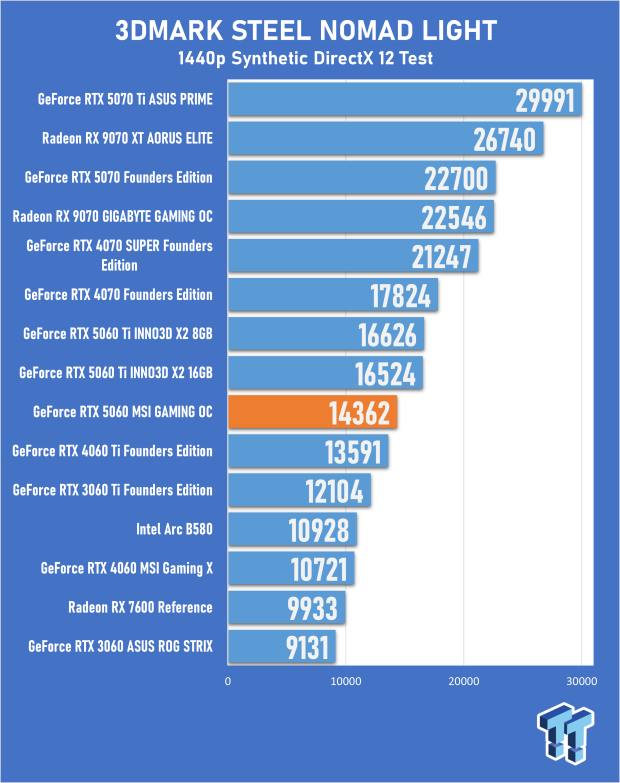
The generational uplift over the RTX 4060 is roughly 4–27% depending on the title — but that huge variance masks the ugly truth: in easy-to-render games you don't need the upgrade, and in hard-to-render games the 8GB VRAM wall hits before the extra GPU performance can shine.
8GB in 2026 Is an Insult
NVIDIA's budget GPU VRAM history is a story of stagnation: the GTX 1060 had 6GB in 2016. The RTX 2060 had 6GB in 2019. The RTX 3060 jumped to 12GB in 2021 — a rare bright spot. Then the RTX 4060 launched with 8GB in 2023, a regression. Now the RTX 5060 ships with 8GB in 2026. In a decade, NVIDIA's entry-level card has gone from 6GB to 8GB — a 33% increase in memory while game assets have grown many times over. GN's verdict is blunt: "The VRAM is the big problem: 8GB becomes limiting at times, and will increasingly become a limiter."
Some of NVIDIA's favored outlets got early drivers specifically to benchmark with DLSS 4 Multi Frame Generation enabled — a feature unavailable on competing hardware. Comparing a native-rendered RTX 4060 or RX 9060 XT against an RTX 5060 running MFG is like measuring someone in a car against someone running. It makes the 5060 look like a generational leap. It isn't.
AMD Is Right There
The AMD Radeon RX 9060 XT launches the same week at the same $299 price point — and AMD is offering a 16GB variant for $349. Early data puts the RX 9060 XT about 6–10% faster in rasterized workloads at 1080p and 1440p compared to the RTX 5060, with the gap widening in memory-hungry titles like Horizon Zero Dawn Remastered and Forza Motorsport where 16GB actually breathes. The RTX 5060 has better ray tracing and DLSS 4, which are genuine advantages. But if you're shopping at $299 for a 1080p or light 1440p gaming card, the RX 9060 XT looks like the better buy on raw rasterization performance without any frame generation tricks.
Why NVIDIA Did This
The cynic's answer is the obvious one: NVIDIA knew the RTX 5060 would receive a rough reception. A card that's essentially a 2020 GPU repackaged for 2026, still with 8GB of VRAM, landing at $299 when supply is already constrained company-wide was never going to score well. Blocking independent reviewers and flooding the zone with MFG-boosted preview content is a deliberate strategy to shape the first-impression narrative before honest benchmarks arrive.
It partially worked — plenty of outlets ran DLSS 4 frame generation comparisons without disclosing they had exclusive early driver access precisely for that purpose. But GamersNexus, Hardware Unboxed, and others called it out explicitly, and now the narrative has flipped: the RTX 5060 is the card NVIDIA tried to hide, and that story is bigger than any benchmark number.
Should You Buy One?
GN's recommendation is "no." I agree. If you're on a truly tight budget and need something today, the RTX 5060 is a functional card — it'll handle 1080p gaming with headroom, and DLSS 4 is genuinely useful. But at the same price, the RX 9060 XT offers more rasterization performance and double the VRAM. And if you can wait until June when more RX 9060 XT stock hits shelves, that's almost certainly the smarter $299 GPU in mid-2026. NVIDIA shipped a product they weren't proud of, proved it by suppressing independent coverage, and got caught anyway. The benchmarks were always going to come out. They just delayed the honest conversation by a week.
Loading comments...