
The Gen 5 Drought Is Over
Let me be blunt: PCIe 5.0 SSDs spent two years being a punchline. The first wave of Gen 5 drives in 2023-2024 ran hot enough to cook breakfast, throttled under sustained loads, and cost a fortune for marginal real-world gains over a good Gen 4 drive. I told everyone to stick with their Samsung 990 Pro or WD Black SN850X and wait.
The wait is over.
Samsung and SK Hynix have both shipped drives that actually deliver on the Gen 5 promise — sequential reads north of 14 GB/s, random IOPS that make your NAS weep with joy, and power efficiency that doesn't require a dedicated heatsink the size of a small country. Well, mostly.
Samsung 9100 Pro — The Speed King Returns
Samsung's 9100 Pro reclaims the performance crown with their new Presto controller on a 5nm process node. The numbers are staggering: 14,800 MB/s sequential read and 13,400 MB/s write on the 1TB model. Random performance hits 2,200K read IOPS and 2,600K write IOPS — nearly double the 990 Pro.
The drive uses Samsung's 236-layer V-NAND V8 TLC and packs 2GB of LPDDR4X DRAM cache on the 2TB model (1GB per TB, as it should be — DRAM-less Gen 5 drives are a crime against data integrity). Available in 1TB ($200), 2TB ($300), and 4TB ($550) capacities, with an 8TB monster at $999.
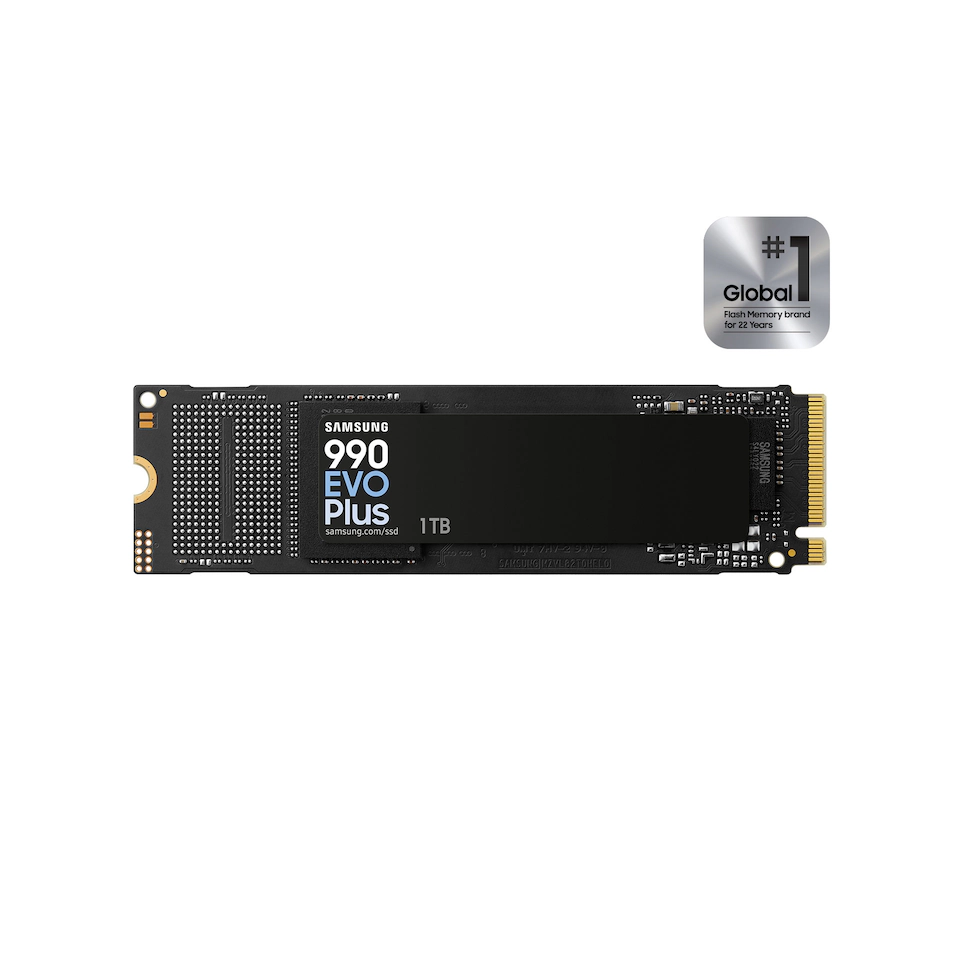
But here's the catch that Samsung's marketing conveniently glosses over: TechPowerUp confirmed you still need a dedicated heatsink to avoid thermal throttling under sustained workloads. Samsung sells a heatsink variant for an extra $20. At these speeds, that's not optional — it's mandatory.
SK Hynix P51 Platinum — The Perfect Score
While Samsung chases raw speed, SK Hynix pulled off something remarkable with the P51 Platinum. TechPowerUp gave it a perfect 5/5 rating and called it "the fastest solid-state drive we ever tested."
The P51 Platinum uses SK Hynix's in-house Alistar ACNT093 controller with their own 238-layer 3D TLC NAND and 4GB LPDDR4X DRAM cache on the 2TB model. This matters: SK Hynix manufactures every major component in-house — controller, NAND, and DRAM. The only other company that can claim that vertical integration is Samsung.
The 2TB model runs $230 ($115/TB), undercutting Samsung's $300 2TB by a significant margin while matching or exceeding its performance in most benchmarks.
The Controller Wars Behind the Scenes
What's driving this Gen 5 renaissance isn't just Samsung and SK Hynix. The controller ecosystem has matured dramatically:
- **Phison E28**: Powers the Corsair MP700 Pro XT and others, achieving record energy efficiency while cutting power consumption roughly in half versus the E26. - **Silicon Motion SM2508**: Found in the WD Black SN8100 and several other drives, emphasizing thermal management. - **Silicon Motion SM2504 XT**: An upcoming controller targeting even better efficiency.
These third-party controllers mean every major SSD brand — Corsair, WD, Crucial, Kingston — can ship competitive Gen 5 drives without designing their own silicon.
What This Means for Your Data
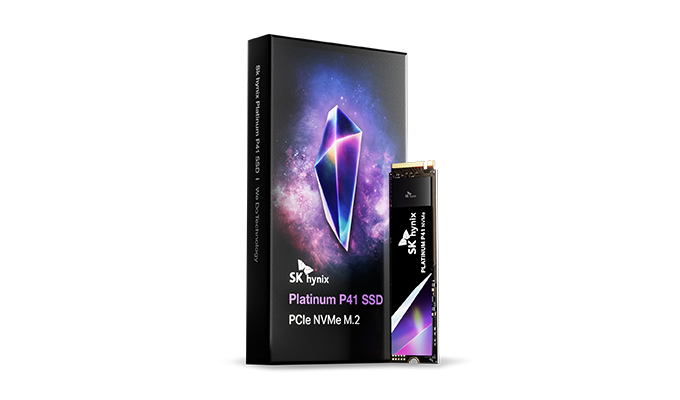
Here's my honest take: if you're running a Gen 4 drive like the Samsung 990 Pro or SK Hynix P41, you're still fine for gaming and general desktop use. Game load times won't halve because they're already bottlenecked by decompression, not raw sequential throughput.
But if you work with large datasets, video editing timelines, AI model training, or you're building a new workstation — Gen 5 is finally worth it. The Samsung 9100 Pro at $150/TB and the SK Hynix P51 Platinum at $115/TB are both excellent choices.
My pick? The P51 Platinum. Better price-per-TB, perfect review scores, full vertical integration, and that 4GB DRAM buffer on the 2TB gives me warm fuzzy feelings about sustained write consistency. The Samsung 9100 Pro wins on peak sequential speed, but the Hynix wins where it counts for data hoarders: sustained performance, endurance (both rated at 1,200 TBW for 2TB), and value.
No RAID is a substitute for backups. But if you're going to build a fast array, these are the drives to do it with.
The Bottom Line
PCIe 5.0 storage has gone from "early adopter tax" to "legitimate upgrade" in the span of six months. Prices are approaching Gen 4 territory, thermals are manageable (with a heatsink), and the performance uplift is real. The Gen 5 SSD war is here, and we're all winning.
Loading comments...