The Swiss Army Mouse Gets a Third Act
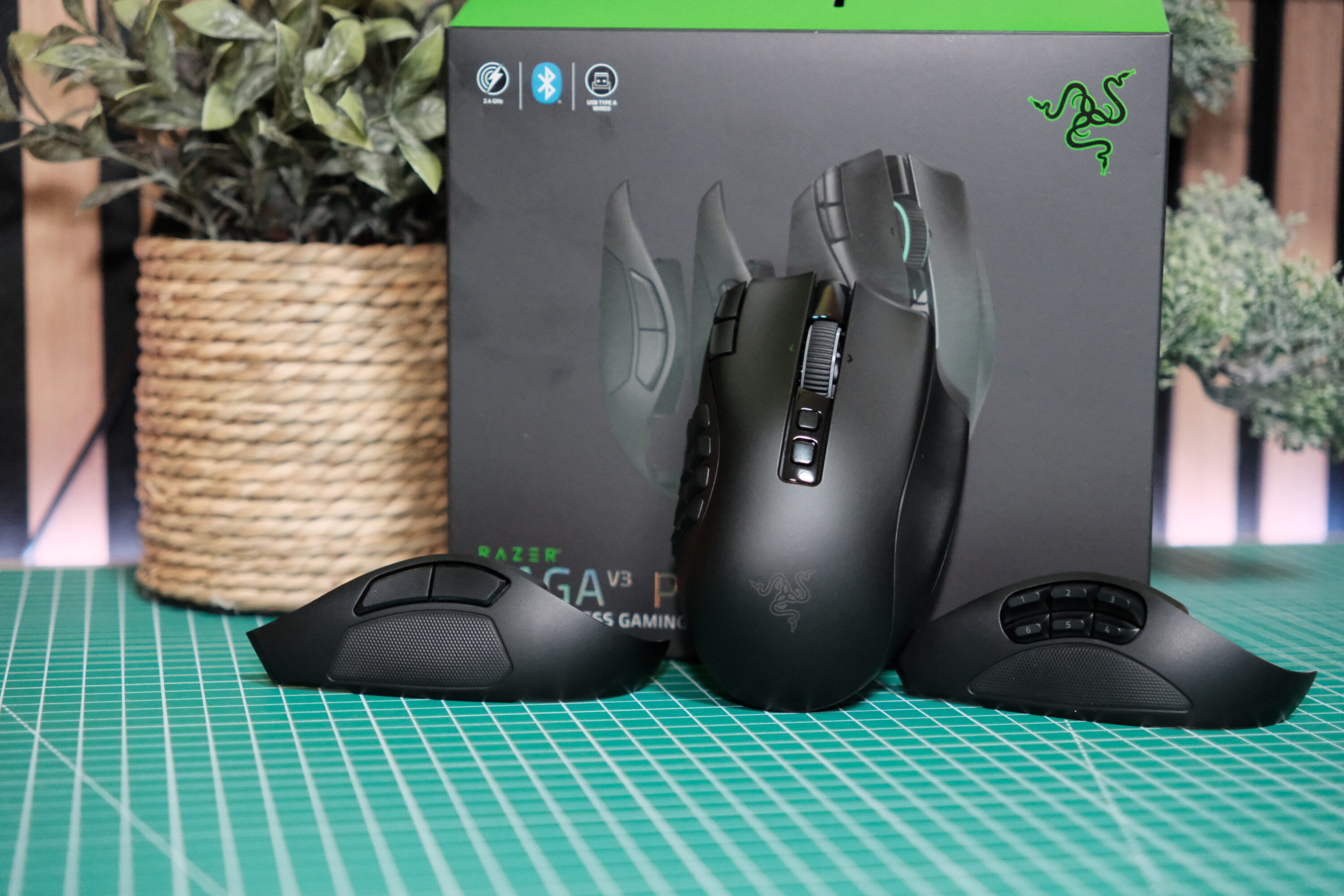
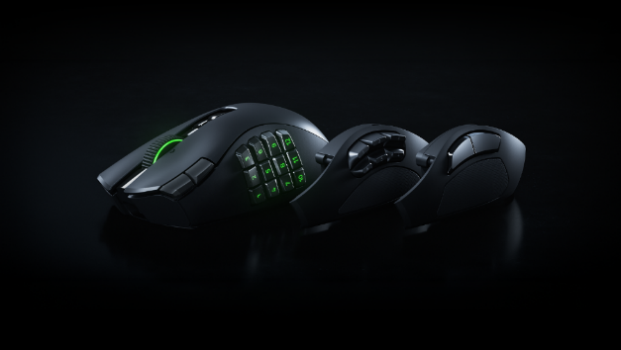
The Naga V3 Pro is here, and Razer is running the same play it ran in 2022: one chassis, three magnetic side plates, and a pitch that this single mouse can cover MMO raiding, MOBA laning, and FPS aim duty. Twelve buttons for your Final Fantasy XIV hotbar, a six-button hex cluster for Dota, or a clean two-button plate when you want to load into Valorant and stop thinking about macros.
It's $179.99 in the US and £179.99 in the UK — the exact same launch price as the Naga V2 Pro. In a year where DDR5 kits and GPUs have been climbing month over month, holding the line on price is genuinely notable. Razer will also sell an MMO Mastery Duo bundle at $359.98 for two units, which is just two mice at full price with a name attached, but fine.
What Actually Changed
The headline upgrade is the Focus Pro 50K Optical Sensor Gen-3: 930 IPS tracking, 90G acceleration, 99.8% resolution accuracy. The V2 Pro shipped with the Focus Pro 30K. Let me be blunt about what that means for you in a match: nothing. Nobody is playing at 50,000 DPI. Nobody is playing at 30,000 DPI. If you're a competitive FPS player you're somewhere between 400 and 1600 DPI with a low sens, and the sensor stopped being the bottleneck around the time the PixArt 3360 shipped. What matters is tracking consistency at your actual lift-off distance and whether the sensor holds accuracy through a fast flick — and 930 IPS covers any human wrist ever measured.
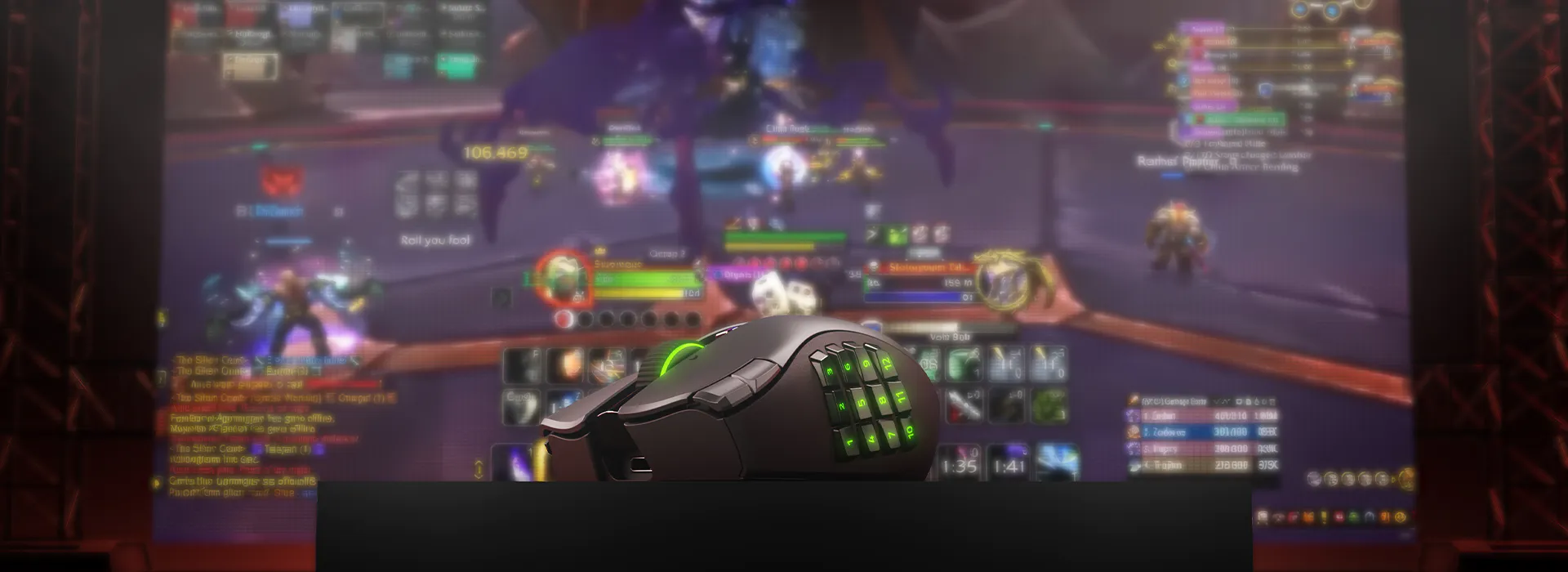
The upgrade that *does* matter is the switch. Gen-4 Razer optical switches rated for over 100 million clicks, up from the Gen-3 units in the V2 Pro at 90 million. Optical switches sidestep the debounce delay that plagues mechanical switches, and the V2 Pro's Gen-3s were already quoted at 0.2 ms actuation. Razer has also gone with double-shot moulded side buttons on the 12-button plate specifically so the legends don't wear off — a small thing, but if you've ever worn the print off a Naga's number pad in a year of raiding, you know why it's there.
The scroll wheel moves to HyperScroll Tilt Wheel Gen-2 with a finer 48-step detent mode and free-spin. The V2 Pro's HyperScroll Pro wheel had six modes; the Gen-2 tightens the tactile step count, which is real for weapon-wheel binds and inventory scrolling. Two edge buttons beside left click handle on-the-fly DPI, there's a lockable ring-finger button, and you get five onboard profiles. Tri-mode connectivity: HyperSpeed wireless, Bluetooth, USB-C wired. It also drops onto HyperFlux V2 and the Mouse Dock Pro for charging.
The Battery Trade Nobody Will Notice
Razer quotes up to 155 hours on HyperSpeed and up to 280 hours on Bluetooth. The V2 Pro was 150 and 300. So: five extra hours on the connection you actually game on, twenty fewer on the one you use for spreadsheets. That's a rounding error either direction, and it tells you the sensor and switch upgrades cost almost nothing in power budget. Fine by me — I'd rather have a wash on battery than watch a flagship regress to 70 hours chasing a spec sheet.
The Missing Number
Here's my problem, and it's a big one. Razer's own product page and every launch write-up I can find list the sensor, the switches, the battery, the plates — and no polling rate. None. Not 1000 Hz, not 4000 Hz, and definitely not the 8000 Hz HyperPolling that Razer's own competitive line has shipped with for years now.
In 2026, an $180 flagship that doesn't put a polling number on the box is telling on itself. Every serious peripheral launch this year — the 8K Hall-effect wave, the wireless 8K field generally — has led with polling rate, because that's where the remaining latency actually lives. At 1000 Hz you're eating up to 1 ms of report jitter on top of click and sensor latency. At 8000 Hz that collapses to 0.125 ms. Every millisecond is a missed headshot, and Razer knows this well enough to market it everywhere else.
The same silence applies to weight. Razer hasn't published a gram figure, and the Naga line has never been light — the modular plate mechanism, the 12-button matrix, and a battery big enough for 155 hours all cost mass. Sticking the 2-button FPS plate on this thing and calling it an FPS mouse is a stretch when a Viper V4 Pro or a Superlight-class shape is going to be dramatically lighter. The plate swap changes your button layout; it doesn't change your chassis mass or your center of gravity.
Who This Is Actually For
If you raid, if you play Dota or League seriously, if your job involves a Photoshop bind for everything — the Naga V3 Pro is the best version of a genuinely useful idea, and it's the same price it was four years ago. Magnetic plate swaps are the right answer for someone whose game library spans genres, and the switch and wheel upgrades are the kind of iteration that shows up in daily use rather than on a benchmark.
If you're buying a mouse to win aim duels, this isn't it, and no side plate changes that. Buy the shape and the weight first, the sensor second, and the polling rate third — and when a manufacturer won't tell you the third one, assume the answer isn't the one you wanted.
Loading comments...