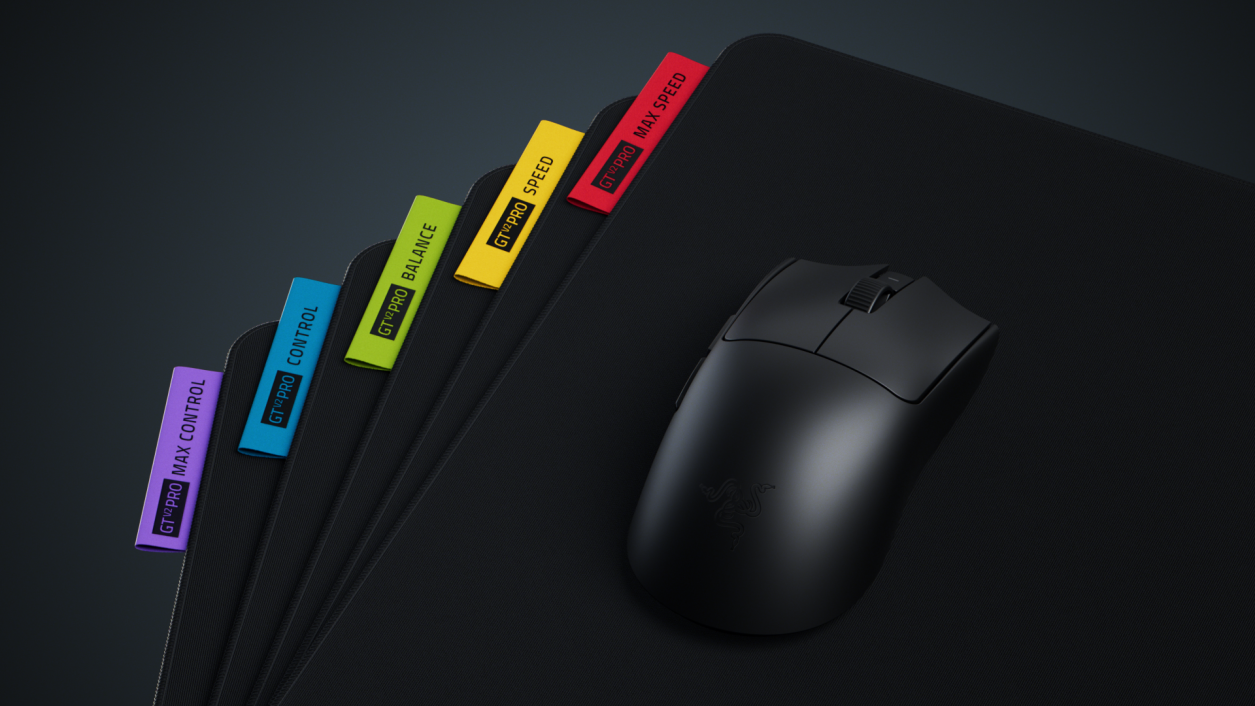
Every Millisecond Is a Missed Headshot
I've tested a lot of mice. Hundreds of hours of aim training, CS2 deathmatches, Valorant ranked — and the thing I keep coming back to is this: the gap between the best and second-best competitive mouse is almost never about DPI or polling rate on paper. It's about how the whole system *feels* when you're tracking a moving head at 200 DPI, 3000 FPS, and your rank is on the line. The Razer Viper V4 Pro is the first mouse in a while that genuinely made me re-examine that assumption.
The headline specs: Focus Pro 50K Gen-3 optical sensor, 8000 Hz polling via HyperSpeed Wireless Gen-2, 49g body, 0.36ms motion latency, and 180 hours of battery life. On paper that's a spec sheet that wins every bar chart. In practice, the differentiator is FrameSync — and that's worth talking about.
What FrameSync Actually Does
Most mice have a polling problem nobody talks about: the sensor captures a frame at one point in time, and the USB polling interrupt fires at a slightly different point in time. At 1000 Hz that gap is random within a 1ms window — negligible. At 8000 Hz, where each poll window is only 0.125ms, that same desynchronization becomes a meaningful percentage of your total latency budget. You can push polling to 8K all you want, but if your sensor and polling aren't synchronized, you're not actually extracting full benefit.
FrameSync locks sensor capture to the USB polling cycle. The result is that every report contains a frame captured *just before* that poll — no random jitter from timing misalignment. Razer claims this also improves battery efficiency because the sensor isn't running an independent clock that wastes cycles between polls. Real-world tested motion latency comes in at 0.36ms — that's the total time from physical movement to host-reported position delta. For reference, a blink takes about 150ms. At that level we're not talking about conscious reaction time anymore; we're talking about the sub-frame precision that separates prediction from reaction in jitter-compensation algorithms.
49g: The Weight That Actually Matters
The ultralight race has gone so far that some mice are now engineering curiosities more than usable tools. Honeycomb shells crack under sweat, PTFE feet wear through in weeks, and anything under 40g usually involves a grip compromise that hurts claw grip players. At 49g, the Viper V4 Pro sits in what I'd call the "competitive sweet spot" — light enough that your wrist doesn't fatigue during 4-hour sessions, heavy enough to feel planted when you need to snap-stop on a head.
The symmetrical ambidextrous shape targets claw and fingertip grip. If you're a palm grip player with a hand under 18cm, you'll want the Razer Cobra HyperSpeed instead — the Viper's rear hump is positioned slightly too far back for small palms. But for medium-to-large hands in claw grip, this is arguably the best production shape available right now. The separated side buttons — a design detail borrowed from the V3 Pro — eliminate the accidental-click problem that plagues mice with flush lateral buttons. Small thing that matters a lot in ranked play.
8K Polling: Do You Actually Need It?
Honest answer: no, not in isolation. At 8000 Hz the per-poll window is 0.125ms — but your monitor's refresh rate is the actual bottleneck for most players. At 240 Hz, one frame is 4.17ms. At 360 Hz, it's 2.78ms. The 0.875ms advantage of 8K over 1K polling is real but it's below one monitor frame for the vast majority of setups. Where 8K actually pays dividends is in high-frequency micro-correction moves — the tiny, sub-frame adjustments competitive players make while tracking. More polls means more granular position data, which means smoother interpolation curves in-engine. In CS2 on a 360 Hz panel, I saw fewer "ghost flicks" — moments where the crosshair reports a position that was already visually past the target. Whether that translates to wins depends entirely on your skill floor; at Diamond+, yes. At Gold, buy a better monitor instead.
The Verdict for Competitive Players
The Viper V4 Pro doesn't reinvent the mouse. What it does is close the remaining gap between "wireless" and "wired" in a way that's now genuinely imperceptible in ranked play. The 180-hour battery means you're charging this thing once a week. The optical switches have zero double-click risk and actuate in 0.2ms. The FrameSync implementation is the kind of engineering detail that won't show up in click-response benchmarks but will show up in your spray-transfer consistency over a long session.
At $159.99 it competes directly with the Logitech G Pro X Superlight 2 DEX. The Logitech is 10g heavier and doesn't have FrameSync. The Razer has a better sensor ceiling and longer battery. If you're playing CS2, Valorant, or any title where tracking consistency matters more than brute aim speed, the V4 Pro is the one to beat in mid-2026. Every millisecond is a missed headshot — and Razer finally engineered a mouse that means that literally.
Loading comments...