The Leak That Actually Matters
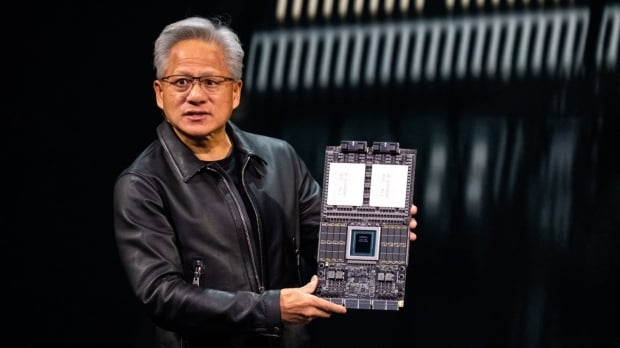
Every week brings another RTX 60 series rumor, and 95% of them are garbage. But this week we got something genuinely interesting: a detailed specification leak from RedGamingTech, corroborated by follow-up reporting from TweakTown, Tom's Hardware, and HotHardware, laying out what NVIDIA's next-generation Rubin-powered consumer GPUs will look like. The short version? Memory buses are getting wider, VRAM is climbing across the stack, and NVIDIA is reportedly targeting a 2x jump in path tracing performance over the RTX 50 series.
Frames per second is the only metric that matters, so let's get into what these cards will actually deliver.
RTX 6090: 192 SMs and a 512-bit Monster
The flagship RTX 6090 is built on the GR202 die — NVIDIA's largest consumer silicon yet. The leak pegs it at 192 SMs, paired with a 512-bit GDDR7 memory bus and 32GB of VRAM. For reference, the RTX 5090 launched with 170 SMs on the same 512-bit bus and 32GB GDDR7 configuration.
On paper, that's only a 13% SM bump over Blackwell. But SM counts never tell the full story. Rubin is a ground-up architectural shift that has already proven itself in NVIDIA's data center lineup — the same architecture powering the Rubin AI accelerators is now trickling down to GeForce. Sixth-generation Tensor cores and fifth-generation RT cores are the real headline here.
The die is expected to be fabricated on a variant of TSMC's 3nm FinFET node (likely N3P), a meaningful density improvement over the custom 4NP process used for Blackwell. Expect clocks to climb accordingly.
RTX 6080: The Biggest Upgrade of the Stack
Here's where it gets spicy. The RTX 6080 is reportedly moving to a 320-bit memory bus with 20GB of GDDR7 — a massive jump from the RTX 5080's 256-bit bus and 16GB configuration. That's a 25% wider bus and 25% more VRAM on the second-tier card. Built on the GR203 die.
Why does this matter? The RTX 5080's 16GB VRAM buffer was the card's most criticized weakness at launch — a $999 GPU with the same VRAM allocation as the $749 RTX 5070 Ti made no sense for anyone running path-traced workloads at 4K. Jumping to 20GB addresses that directly. Combined with higher GDDR7 speeds (likely 32-36 Gbps versus the 5080's 30 Gbps), effective memory bandwidth could climb by 40-50% generation-over-generation.
This is the card that buyers who were priced out of the RTX 5090 but frustrated by the 5080's VRAM should be watching.
RTX 6070: 16GB and a 256-bit Bus
The RTX 6070, built on GR205, steps up to a 256-bit bus with 16GB of GDDR7. Compare that to the RTX 5070's paltry 192-bit bus and 12GB buffer, and it's immediately clear NVIDIA heard the complaints. A 33% wider bus and 33% more VRAM on the mainstream tier is exactly the kind of generational progress that got lost in the Ada Lovelace → Blackwell transition.
For 1440p high-refresh gaming with ray tracing enabled, 16GB is the new sweet spot. The RTX 6070 finally puts the mainstream tier on solid VRAM footing for the rest of this console generation.
The 2x Path Tracing Claim
This is the number NVIDIA wants you to focus on: roughly 2x path tracing performance over the RTX 50 series. Raster gains, by contrast, are pegged at a much more modest 30-35%.
The asymmetry makes sense architecturally. Fifth-generation RT cores reportedly include expanded BVH traversal hardware and improved opacity micro-maps — both critical for path-traced workloads where the RT pipeline is the bottleneck. If the 2x claim holds, games like Cyberpunk 2077 path tracing mode and Alan Wake 2 could finally become playable at 4K native on anything below the flagship.
But the 30-35% raster figure is the one to worry about. That's roughly in line with the RTX 40 → RTX 50 raster uplift, which many reviewers called underwhelming. If you're playing older titles or esports games that don't lean on RT, don't expect a revolution.
The H2 2027 Problem
Here's the kicker. Every leak converges on the same launch window: the second half of 2027 at the absolute earliest, with 2028 looking increasingly likely. NVIDIA has deprioritized consumer GPU development in favor of its data center roadmap — Rubin for AI accelerators is already shipping, but Rubin for GeForce is still easily 18 months out.
That means the current RTX 50 lineup isn't just what we have now. It's what we're going to have for a long, long time. The supply crunch, the cancelled RTX 50 Super refresh, and the RTX 3060 resurrection — all of it points to NVIDIA treating the 2026-2027 consumer market as something to manage, not something to grow.
What About the RTX 6060?
Notably absent from this leak: any details on the RTX 6060 or below. Given that NVIDIA is reportedly pulling the rumored RTX 5050 9GB from the roadmap entirely and bringing back the RTX 3060 on GDDR6, the xx60-tier Rubin silicon may not even exist yet. Memory allocation economics have fundamentally rewritten how NVIDIA thinks about the budget segment, and Rubin — with its mandatory GDDR7 dependency — may never reach sub-$400 price points.
The Unfinalized Caveat
One important note that TechSpot rightly emphasized in their coverage: despite the confident claims circulating across YouTube and Twitter, detailed specifications for Rubin-based gaming GPUs do not exist in finalized form yet. NVIDIA itself has reportedly not locked in final die configurations. SM counts, clock speeds, and TDPs could all shift before tape-out, let alone launch.
Take everything here as a directional roadmap, not a spec sheet. The architectural choices (Rubin, TSMC 3nm, GDDR7 across the stack, 6th-gen Tensor, 5th-gen RT) are credible and align with NVIDIA's data center disclosures. The specific SM and bus width numbers are educated guesses until NVIDIA says otherwise.
Frame Chaser's Take
A 192-SM flagship with 2x path tracing performance is legitimately exciting. A 20GB RTX 6080 fixes the single biggest criticism of the current generation. A 256-bit RTX 6070 finally gives mainstream buyers the VRAM they deserve.
But 18 months is a long time to wait, and with current RTX 50 cards commanding inflated prices, the smart play is still to buy what's available now if you need a GPU. If you can hold off? Rubin looks like the real generational leap that Blackwell wasn't.
Frames per second is the only metric that matters — and if the leaks are right, Rubin has them in spades.
Loading comments...