The Closed-Back Problem, Solved (Maybe)
Here is the dirty secret of professional audio: most closed-back studio headphones don't sound good. They're purchased out of necessity — tracking sessions, live monitoring, any situation where open-back bleed is a dealbreaker — and then tolerated for the rest of their working life. Engineers learn which colorations to mentally subtract, compensate in the mix, and move on. It's a deeply imperfect system that the industry has largely just accepted.
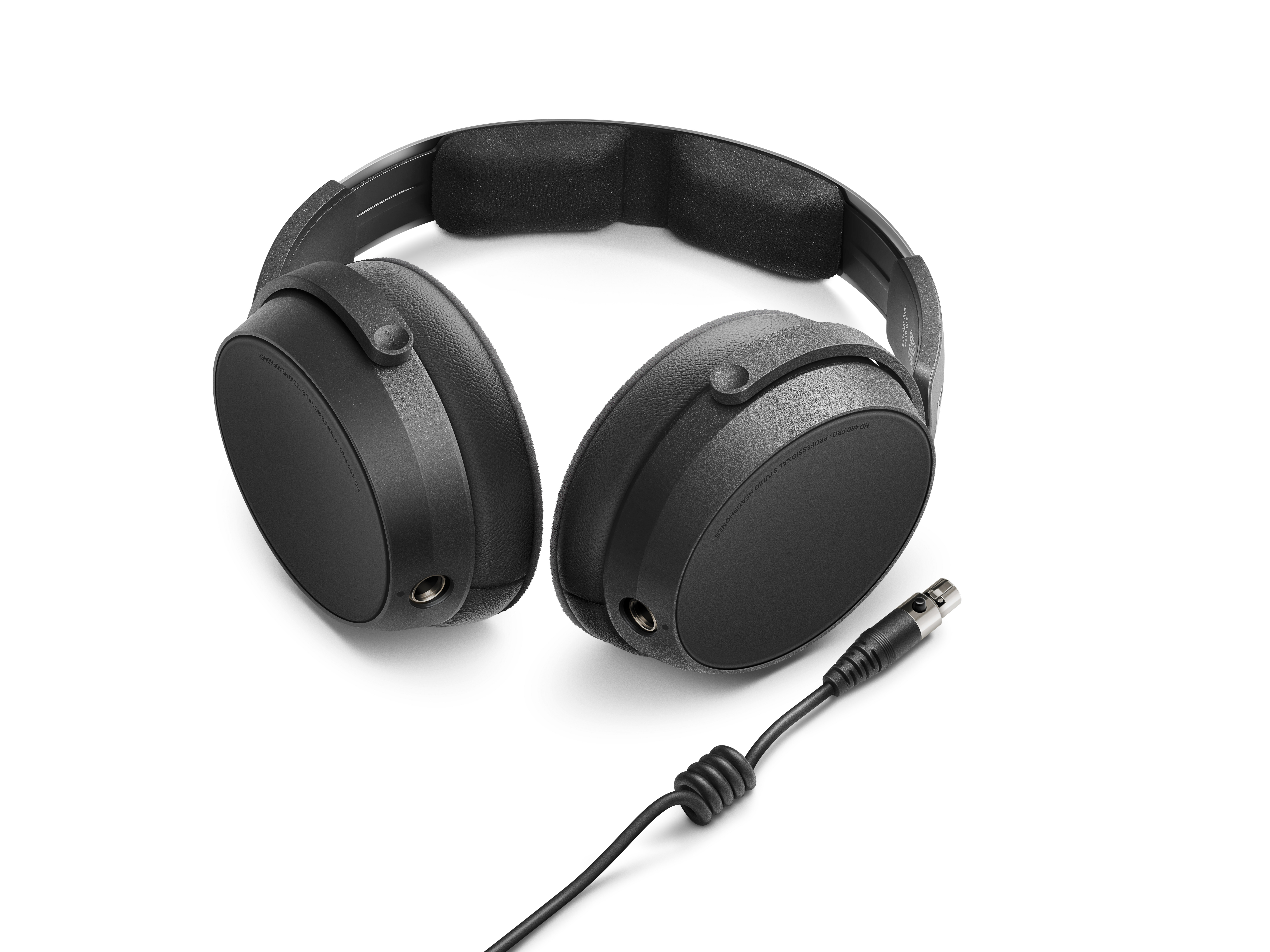
Sennheiser's launch of the HD 480 Pro on April 21, 2026 is a direct challenge to that compromise. The pitch is bold: take the 38mm neodymium dynamic drivers from the well-regarded HD 490 Pro open-back, re-engineer the acoustic chamber for closed-back geometry, layer in a Vibration Attenuation System to suppress internal resonance, and deliver something that actually monitors accurately rather than just isolates. Whether it fully succeeds is a question that will take months of real-world sessions to resolve — but the engineering approach is serious, and that alone makes it worth paying attention to.
Shared DNA, Different Mandate
The 38mm transducers in the HD 480 Pro are physically the same as those in the HD 490 Pro, but the tuning diverges by necessity. Open-back and closed-back chambers interact with a driver in fundamentally different ways. An open-back lets the rear wave escape, avoiding the pressure buildup that causes the bloated bass and smeared transients that make most closed-backs sound like they're mixing inside a bucket. Sennheiser's engineers had to model and treat the sealed rear chamber to prevent it from coloring the output.
The published specs reflect that work: 3Hz to 28.7kHz frequency range at -10dB, THD under 0.5% at 1kHz/100dB SPL, maximum SPL of 130dB, and 130Ω impedance. That impedance figure is worth noting — 130Ω is on the high side for anything plugged into an interface's headphone output, which typically delivers 120mW or less into 150Ω loads. At 107dB sensitivity (1kHz/1Vrms), the HD 480 Pro will reach workable listening levels from most professional interfaces, but it's clearly biased toward proper output stages. Plug this into a laptop's 3.5mm jack and you'll be underwhelmed.
The Vibration Attenuation System
The feature Sennheiser is most vocal about is the Vibration Attenuation System — a set of mechanical decouplers integrated into the cable routing and earcup attachment points that prevent structure-borne vibration from reaching the driver assembly. The concept is borrowed from precision measurement and scientific instrumentation: if you can't eliminate vibration at the source, mechanically isolate the sensitive element from the structure it rides on.
This matters more than it sounds. In live environments, low-frequency stage vibration can couple directly through a headphone cable into the earcup, creating false bass that corrupts a monitor engineer's level decisions. The coiled cable section near the connector is specifically designed to break that transmission path. Combined with the grooved ear pads — which seat correctly even with glasses temples crossing the seal zone — passive isolation from the HD 480 Pro reaches an estimated 35-45dB across mid and high frequencies in SoundGuys lab testing, with the usual rolloff below 250Hz where physics limits what any passive design can do.
Who This Is Actually For
Sennheiser is positioning the HD 480 Pro at producers, mix engineers, recording engineers, and front-of-house engineers who need closed-back accuracy, not just closed-back isolation. At $399 MAP ($439 for the HD 480 Pro Plus with hardshell travel case), it's priced against the Sennheiser HD 620S and well above the budget workhorses that dominate studio tracking setups. This is not a Sony MDR-7506 replacement — it's for someone who has already accepted that the $100 closed-back is costing them in mix translation and is willing to pay for something actually engineered to measure correctly.
For that audience, the 272g weight and the Special Axes Geometry self-adjustment system suggest Sennheiser thought about eight-hour session comfort, not just short-term showroom impressions. The braille-marked earcups — a small but genuinely thoughtful accessibility detail — reinforce that this is a product designed for professional working environments rather than the audiophile demo circuit.
Flat Response Is Just the Beginning
The HD 490 Pro set a benchmark for what open-back studio monitoring can be at its price point. The HD 480 Pro's proposition is that you shouldn't have to give up 40% of that accuracy just because your session requires isolation. If Sennheiser's acoustic engineering has brought this closed-back within striking distance of the 490 Pro's measured performance, it becomes a genuinely important product — not because closed-backs haven't been done before, but because none of them have been done quite like this.
The competition from Beyerdynamic (DT 770 PRO X), Final (DX3000CL), and Meze (STRADA) gives the HD 480 Pro real pressure in the $300-500 range. But Sennheiser's specific advantage is the driver pedigree — using the same 38mm platform as a headphone that's already measured and reviewed extensively gives engineers a baseline to reason from. Flat response is just the beginning, but it's the right place to start.
Loading comments...