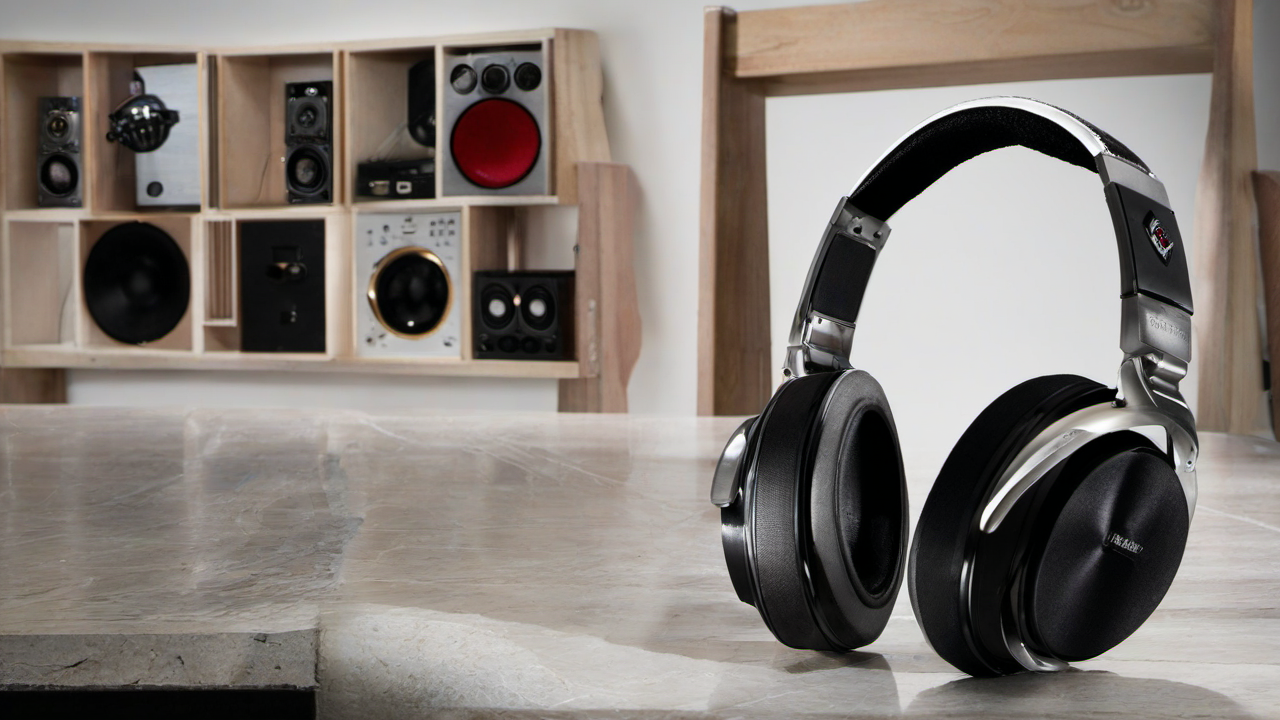
MOMENTUM 5 Finally Targets Real-World Use, Not Just the Spec Sheet The MOMENTUM 5 Wireless launch is finally a clean example of engineering-led iteration instead of vanity spec inflation. Sennheiser is positioning it as a June 16, 2026 release at $399.99, and the signal is clear: this generation is built for people who actually commute, travel, and keep headphones in production for years. The old Momentum 4 model had one defining virtue—absurd battery endurance—but weaker ANC ergonomics for dense noise environments, so a reset was overdue.
Where the Improvement Is Real: ANC and Mic Topology From a signal-chain perspective, the most important hardware change is mic topology. The MOMENTUM 5 doubles its mic array to four microphones per side, and that directly translates to stronger scene estimation in both wind and ambient noise rejection. In the same coverage, Sennheiser states average attenuation moved from 76% on the Momentum 4 to 86% on the Momentum 5, with a meaningful 3–5 dB edge below 1.1 kHz. In practical terms, that means cleaner masks under the commute, better conversational intelligibility at low frequencies, and fewer ANC artifacts in rough acoustic scenes.
Battery Claims vs. Measured Endurance Is Where Engineers Get Nervous For portable hearing, battery is either a headline or a footnote. The older Momentum 4 has a hard, independently measured 56h21m continuous playback figure in the ANC-on standardized test (75dB), and that is a very strong baseline. The Momentum 5 claims up to 57 hours with ANC on, so headline parity is there, but that number is still a launch claim rather than a fully published independent validation in this source context. The bigger engineering delta is not just runtime, though: replaceable 700 mAh battery architecture plus a charge-cap mode (to curb long-term degradation) is one of the few truly durable moves we see in flagship ANC headphones.
Momentum 4 vs Momentum 5 Runtime Focus (ANC On)
Tonal Consequences: Stronger Isolation, Less Neutral Baseline This is where the design choice gets less flattering for purists. The MOMENTUM 5’s default tuning is less “flat-response first” than the M4’s, with heavier low-end emphasis and treble softening in the highest octave. In Waveform terms, imaging remains controlled but tonal neutrality shifts toward mass-market warmth. The source data also shows a mixed MDAQS shift: Timbre drops from 4.8 (M4) to 4.6 (M5), while Distortion climbs from 3.5 to 4.6—nice, but not enough to call this a sonic home-run. In short: you get better suppression, plus better serviceability, but you may spend more time shaping response than on a truly plug-and-play chain.
Codec and Lifecycle Priorities Signal Smarter, Not Harder, Design Sennheiser also modernizes connectivity with Bluetooth 5.4 hardware, Snapdragon Sound/aptX Lossless support, and a software-forward tuning path via Smart Control Plus. That is the right direction for mixed-headphone ecosystems. If you are an engineer or studio-adjacent listener, this is exactly the right trade: cleaner long-term ownership and a feature floor that survives software cycles. But you still need to treat it like a calibrated tool, not a neutral reference out of the box.
Average ANC Reduction Delta
Loading comments...