The Spec Sheet That Makes Me Nervous (In a Good Way)
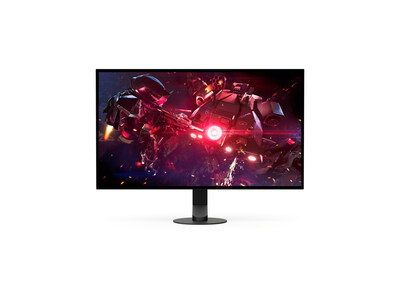
Sony just dropped the INZONE M10S II, and I need to talk about it — not because it's the fastest monitor ever made (it might be), but because it represents a fundamental shift in how manufacturers are approaching OLED for competitive gaming.
The headline numbers: 27 inches, 2560x1440 resolution, 540Hz refresh rate at native QHD, a dual-mode option hitting 720Hz at 1080p, and a claimed 0.02ms gray-to-gray response time. All of this running on a tandem-structured WOLED panel.
Let that sink in. Tandem OLED at 540Hz. In a 27-inch monitor. For $1,099.
Why Tandem OLED Changes the Equation
For those unfamiliar: tandem OLED stacks two OLED emission layers on top of each other. The practical result is roughly double the peak brightness at the same current, or the same brightness at half the current — which means less stress on the organic compounds and, critically, longer panel lifespan.
This has been the elephant in every OLED monitor review I've written. Regular WOLED panels deliver incredible contrast and response times, but peak brightness has always been the weak point compared to Mini-LED, and burn-in paranoia is real among the Delta E-obsessed crowd (guilty as charged). Tandem OLED doesn't eliminate these concerns, but it meaningfully reduces them.
The M10S II specifically addresses the brightness penalty that plagues competitive gaming modes. Sony's reworked Motion Blur Reduction technology avoids the traditional approach of strobing the backlight (which dims the image significantly). Instead, it boosts brightness during active frames, maintaining visibility while keeping motion sharp. If this works as described, it's a genuine innovation — most MBR implementations on OLED panels cut brightness by 40-60%, making them useless in bright game scenes.
The Fnatic Collaboration Isn't Just Branding
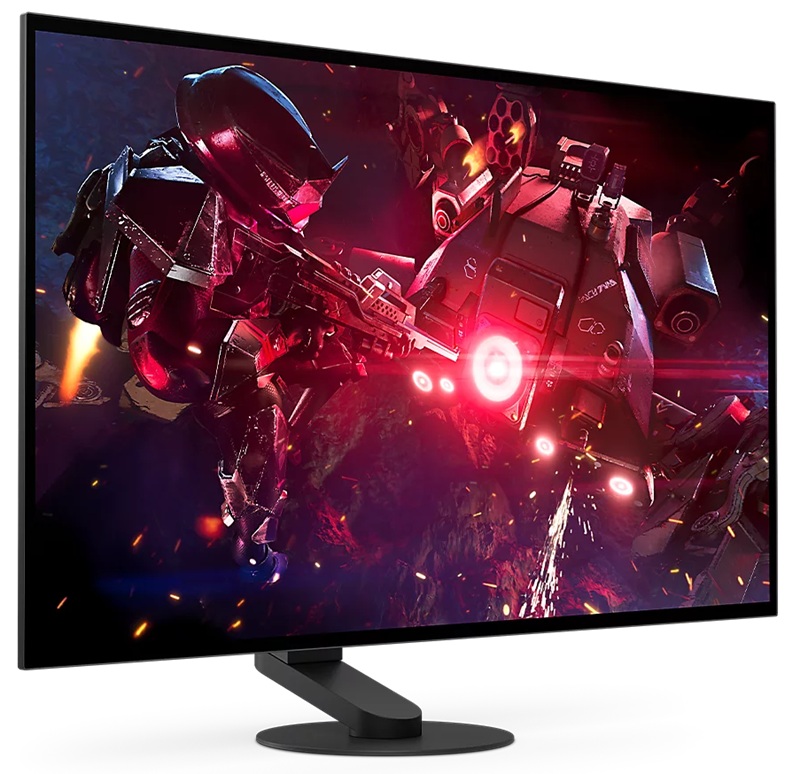
Sony partnered with Fnatic on the M10S II, and this goes beyond slapping a logo on the box. The monitor includes FPS Pro and FPS Pro+ picture presets developed with the esports team. FPS Pro delivers an LCD-like image with boosted gamma and sharpness that competitive players have been trained on for years. FPS Pro+ is the OLED-tuned variant that leverages the panel's infinite contrast.
There's also a 24.5-inch tournament mode that masks the outer portion of the display to simulate a smaller screen — a nod to how tournament organizers still standardize on 24.5-inch monitors. Whether you find this useful depends on how seriously you take your ranked games, but it's a thoughtful inclusion.
Dual-Mode: The Pragmatic Compromise
The 720Hz mode at 1080p is clever positioning. Most competitive FPS players at the highest level still play at 1080p or even stretched 4:3 — they don't care about resolution, they care about frame rates and input lag. Giving them a single monitor that does 540Hz at 1440p for general use and content consumption, then switches to 720Hz at 1080p for tournament play, eliminates the need for two displays.
But I have questions. What's the scalar quality like at 1080p on a 1440p native panel? Integer scaling would require 4x (2160p to 1080p), which this panel can't do. Non-integer scaling at 720Hz introduces a whole category of potential artifacts. I'll reserve judgment until I can measure it, but this is the kind of detail that matters to anyone who's ever spent an afternoon calibrating their monitor with a colorimeter.
How It Stacks Up
The OLED gaming monitor space in 2026 is getting absurdly competitive:
- **LG 32GX870B**: LG's first 32-inch 4K tandem WOLED, 240Hz native with 480Hz dual-mode at 1080p, 1,500 nits peak brightness, DisplayHDR True Black 500. Pricing TBA but expected later this year. - **ASUS ROG Swift PG27UCWM**: The first 27-inch 4K tandem WOLED with RGB-stripe pixel layout — no more RGBW pentile subpixel compromises at 4K. Announced at CES 2026. - **AU Optronics 800Hz LCD Panel**: AUO showed a 24-inch 1080p 800Hz LCD panel in April. It won't have OLED's contrast or response times, but 800Hz is 800Hz.
The Sony sits in a unique position: it's the only tandem OLED targeting the esports/competitive segment specifically. The LG and ASUS entries are 4K productivity/gaming hybrids. Sony is saying "this is for people who play Valorant 8 hours a day."
Pricing and Availability
The INZONE M10S II is priced at $1,099.99 in the US and $1,499.99 in Canada. European availability is expected in June 2026 at approximately €1,350. Sony includes a three-year warranty with OLED-specific protection features.
At $1,099, it undercuts what I expected. The original M10S launched at $899 with a regular WOLED panel at 480Hz. An extra $200 for tandem OLED, 540Hz, and the Fnatic tuning seems reasonable — assuming the color accuracy holds up out of the box.
My Take
I won't give a verdict until I've measured this panel with my i1Display Pro. Factory calibration claims mean nothing until I see the Delta E numbers across the full sRGB and DCI-P3 gamuts. The 0.02ms response time claim needs verification at multiple gray-to-gray transitions, not just the fastest one Sony could find.
But on paper? This is exactly the monitor the competitive OLED crowd has been waiting for. Tandem OLED solves the brightness problem. 540Hz at 1440p is the sweet spot between resolution and refresh rate. The Fnatic presets suggest someone actually asked competitive players what they want.
I'm cautiously optimistic. And for me, that's practically effusive praise.
Loading comments...